HOT PRODUCTS
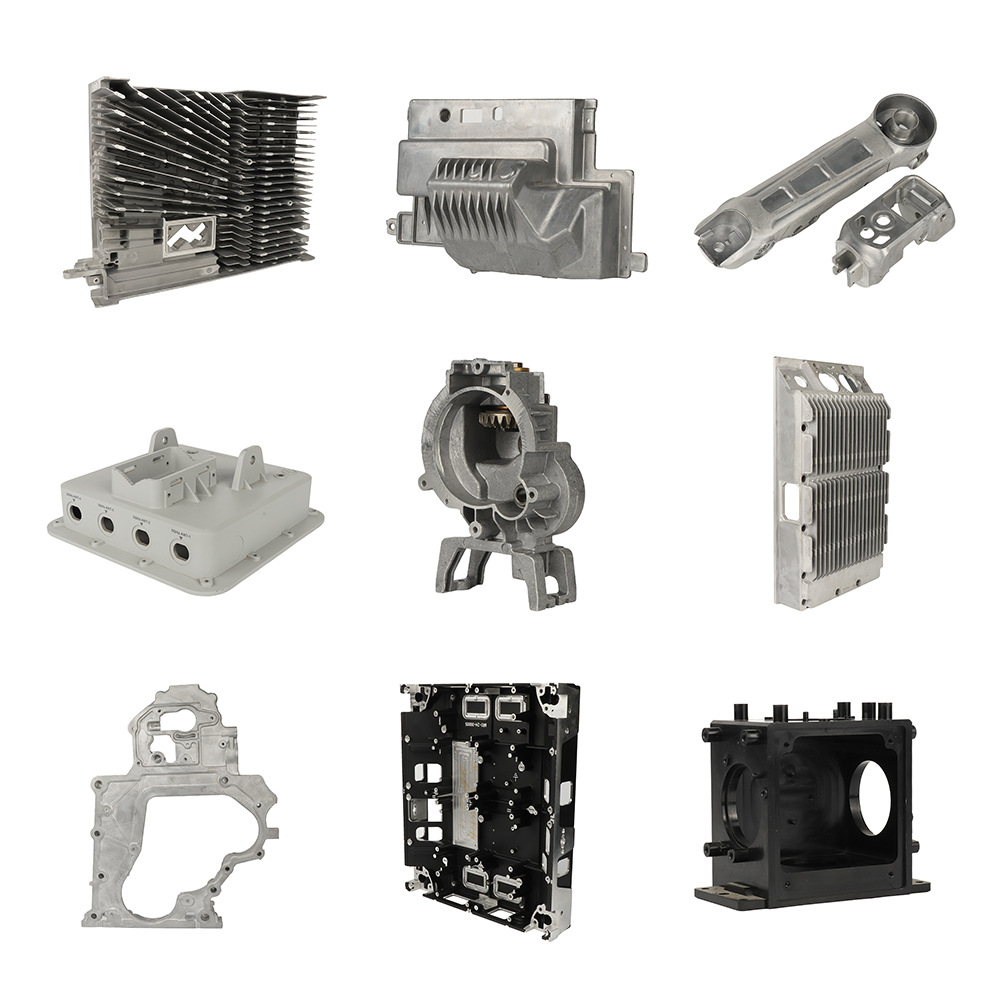
CNC turning | What are CNC turning parts?
What are CNC Turning Parts?
1. Introduction: Overview of CNC Turning & Enterprise Strength
1.1 What Are CNC Turning Parts
CNC turning parts are precision mechanical components manufactured through computer numerical control (CNC) turning process. Different from stamping, casting and forging parts, CNC turning adopts a processing mode where the workpiece rotates at a high speed and the tool moves linearly and laterally. It is mainly used for machining rotational symmetrical parts with cylindrical, conical, spherical and threaded structures.
This subtractive manufacturing method can remove excess material from solid metal or plastic blanks to achieve precise dimensional tolerance and smooth surface finish. It supports single-piece prototype customization and mass standardized production, and is one of the most fundamental and widely used precision machining processes in the hardware manufacturing industry.
1.2 Common Machining Materials for CNC Turning
CNC turning has strong material compatibility, covering mainstream industrial processing materials: aluminum alloy, stainless steel, carbon steel, brass, copper, titanium alloy and engineering plastics. Different materials are matched with exclusive turning parameters to ensure machining accuracy and surface quality.
1.3 Company Profile: Xinghang Precision Hardware
Xinghang Precision Hardware is a professional one-stop manufacturer focusing on CNC turning parts customization, precision machining and mass batch production. We integrate precision drawing analysis, CNC turning processing, secondary finishing, surface treatment and standardized batch delivery services, covering full-process production from prototype trial production to large-scale mass orders.
Our factory is equipped with high-precision CNC lathes, Swiss-type turning machines, three-coordinate detectors and surface roughness testing equipment. We strictly control product tolerance, surface finish and batch consistency, solving common industry problems such as dimensional deviation, burr residue and uneven surface. We always adhere to the preferential policy of the more bulk orders, the more discounts, helping global customers optimize procurement costs and stabilize supply chain quality.
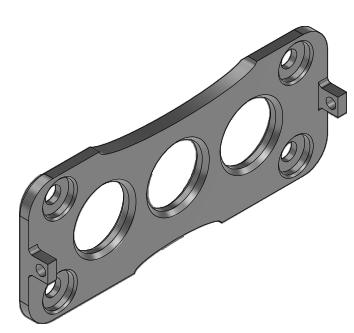
2. Universal Standard Parameter Table for CNC Turning Processing
The following core processing parameters are universal industrial standards for CNC turning, applicable to mainstream metal and plastic materials. All data comply with international machining precision specifications, providing authoritative reference for product design, technical evaluation and batch procurement.
| Core Processing Parameter | Standard Industrial Range | Remark & Application |
|---|---|---|
| Dimensional Tolerance | ±0.005mm – ±0.05mm | Ultra-precision to general industrial grade |
| Surface Roughness (Ra) | Ra0.8μm – Ra6.3μm | Support mirror polishing for higher finish |
| Max Machining Diameter | 0.5mm – 300mm | Covers micro parts and large shaft parts |
| Max Machining Length | 2mm – 800mm | Support customized ultra-long shaft parts |
| Thread Machining Accuracy | 6G / 6H Standard Grade | Meet international thread matching standards |
| Concentricity Tolerance | ≤0.01mm | Ensure high rotation stability of shaft parts |
| Batch Repeatability Error | ≤0.02mm | Guarantee consistent batch assembly |
3. Core Purposes of CNC Turning Parts
3.1 Precision Rotational Structural Support
As the core basic parts of mechanical equipment, CNC turning parts such as shafts, bolts and sleeves provide stable rotational support and structural fixation for automated equipment, electronic devices and power machinery. High concentricity and dimensional accuracy ensure no jitter or deviation during high-speed equipment operation, maintaining long-term structural stability.
3.2 Precise Transmission & Power Operation
Turned parts like gear shafts, motor shafts and thread transmission accessories undertake the core function of mechanical power transmission. Accurate thread matching and rotational tolerance ensure efficient friction transmission, reduce equipment operation loss, and improve the overall operating efficiency and response sensitivity of mechanical systems.
3.3 Sealing Matching & Assembly Connection
Precision turning parts such as sealing sleeves and connector pins have ultra-smooth surface finish and precise matching size, which can achieve tight assembly and effective sealing. They prevent oil leakage, air leakage and signal failure of equipment, and are widely used in hydraulic, pneumatic and precision electronic assembly systems.
3.4 Wear Resistance & Service Life Extension
After fine turning and professional surface treatment, the parts have uniform and dense surface texture, effectively improving wear resistance, oxidation resistance and corrosion resistance. They adapt to long-term continuous operation and complex working environments, greatly reducing equipment maintenance frequency and replacement cost.
4. Unique Competitive Advantages of CNC Turning Parts
4.1 Ultra-High Machining Precision & Stability
CNC turning adopts fully digital program control, avoiding manual machining errors. It can stably achieve micron-level tolerance control and high concentricity, which is impossible for traditional lathe processing. The processed parts have smooth surface without burrs, fully meeting the assembly requirements of precision industrial equipment.
4.2 Excellent Adaptability to Rotational Parts
For all rotational symmetrical structural parts, CNC turning has higher processing efficiency and better molding effect than milling and other processes. It is the optimal process for shaft parts, pin parts, sleeve parts and threaded parts, with strong structural pertinence.
4.3 Flexible Customization & Strong Compatibility
CNC turning supports personalized customization of different sizes, structures, materials and surface treatments. It can quickly switch production between single-piece prototype trial production and large-batch mass production, with flexible production modes to meet the diversified procurement needs of customers.
4.4 High Material Utilization & Cost-Effectiveness
Compared with full-CNC milling processing, turning has higher material utilization rate and shorter processing cycle. Under the premise of ensuring high precision, it effectively reduces production and processing costs, with significant economic advantages for long-term batch procurement.
4.5 Excellent Batch Consistency
Relying on fixed program parameter control, all parts in mass production maintain consistent size, tolerance and surface quality, with extremely low batch error. It is fully compatible with automated assembly lines and standardized industrial production.
5. Main Application Fields & Typical Usage Scenarios
5.1 Industrial Automation Equipment
Widely used in automation equipment transmission shafts, positioning pins, bearing sleeves, thread fasteners and hydraulic valve core parts. High-precision turning parts ensure the stable operation of automated production lines, reduce equipment failure rate, and improve production continuity and stability.
5.2 New Energy Industry
Applied to new energy vehicle motor shafts, battery conductive pins, energy storage equipment connecting shafts and photovoltaic equipment precision connectors. The parts feature high precision, high conductivity and strong stability, adapting to the long-term stable operation requirements of new energy equipment.
5.3 Intelligent Consumer Electronics
Used for drone shaft core parts, smart wearable device precision pins, communication equipment connectors and camera structural accessories. Ultra-precision turning technology realizes miniaturization and lightweight of electronic parts, ensuring product portability and stable signal transmission.
5.4 Medical & Precision Instrument Industry
High-precision medical turning parts are applied to surgical instrument connecting shafts, detection instrument precision components and laboratory equipment fixing parts. The products meet medical-grade precision and safety standards with high surface finish and zero burrs.
5.5 Aerospace & Mechanical Hardware Industry
Aerospace-grade turning parts include lightweight titanium alloy shafts and high-strength fastening parts, meeting high-end industrial standards of high temperature resistance, high strength and high stability. Conventional hardware turning parts are widely used in various mechanical assembly and equipment supporting scenarios.
6. Authoritative Expert Viewpoints on CNC Turning Machining
We quote the professional viewpoint of Mark Jason, a senior precision machining expert from the Global Advanced Manufacturing Research Institute, who has more than 15 years of research experience in CNC precision processing technology:
“CNC turning is the cornerstone of precision hardware manufacturing. Many purchasers only focus on tolerance data but ignore batch consistency and surface uniformity. For rotational parts, reasonable matching of turning speed, feed rate and tool parameters is more important than blind pursuit of ultra-high precision. Professional manufacturers can balance precision, quality and cost, which is the core value of customized CNC turning processing.”
The expert also emphasized that with the upgrading of intelligent manufacturing, the market demand for high-precision, customized and integrated turning parts is increasing, and low-precision and rough processing products will be gradually eliminated from the market.
7. Frequently Asked Questions (FAQs) of CNC Turning Parts
Q1: What is the difference between CNC turning and CNC milling?
CNC turning is mainly for rotational symmetrical parts, with workpiece rotation and tool fixed movement, featuring high efficiency and high concentricity; CNC milling is suitable for irregular, planar and special-shaped structural parts, with tool rotation and workpiece fixed. The two processes are complementary and applicable to different product structures.
Q2: What precision can industrial-grade CNC turning parts achieve?
Conventional industrial turning parts can reach ±0.02mm tolerance, and ultra-precision customized parts can stably achieve ±0.005mm tolerance. The surface roughness can reach Ra0.8μm or higher mirror effect, meeting the assembly needs of most precision equipment.
Q3: What materials are suitable for CNC turning processing?
It supports aluminum alloy, stainless steel, brass, copper, carbon steel, titanium alloy and various engineering plastics. Different materials adopt exclusive processing parameters and tools to ensure processing quality and avoid tool wear and part deformation.
Q4: Can CNC turning parts be customized with surface treatment?
Yes. We support anodizing, sandblasting, powder spraying, electroplating, polishing and passivation treatments. Surface treatment can improve corrosion resistance, wear resistance and appearance texture of parts, adapting to different usage environments.
Q5: What is the MOQ for customized CNC turning parts?
Xinghang Precision Hardware supports small-batch prototype trial production and large-scale batch mass production with no rigid MOQ limit. Meanwhile, we implement a tiered discount policy: the larger the batch order quantity, the more favorable the unit price, helping long-term customers reduce procurement costs significantly.
8. Industry Development Trends & High-Quality Supplier Selection Guide
8.1 Core Development Trends of CNC Turning Industry
The CNC turning processing industry is developing towards ultra-precision machining, intelligent production, integrated processing and green manufacturing. With the upgrading of new energy, intelligent manufacturing and high-end equipment industries, the market has higher requirements for part precision, surface quality, batch consistency and delivery efficiency.
In addition, turn-mill composite processing has become an industry mainstream, realizing one-time molding of complex parts, reducing secondary processing errors, and improving overall production efficiency and product qualification rate. Customized small-batch and high-precision medium-batch orders are gradually becoming the core market demand.
8.2 Key Standards for Selecting Qualified CNC Turning Suppliers
- Professional precision processing equipment: Equipped with high-precision CNC lathes and Swiss-type turning machines to ensure ultra-high machining accuracy and stability.
- Complete testing system: Own three-coordinate detectors, roughness testers and dimensional inspection tools to strictly control product quality.
- Rich material processing experience: Skilled in processing different metal and plastic materials, accurately matching process parameters to avoid part deformation and defective products.
- Strict batch quality control: Standardized SOP production process to ensure consistent quality of mass products and stable delivery.
- Flexible customization & preferential policies: Support prototype trial production and batch orders, with transparent pricing and bulk discount mechanisms.
- Perfect one-stop service: Integrate drawing optimization, processing, surface treatment and after-sales support to reduce customer procurement links.
9. Xinghang Precision Hardware Bulk Discount Policy & Contact Information
9.1 Exclusive Bulk Order Preferential Policy
Xinghang Precision Hardware focuses on long-term stable win-win cooperation with global customers. We always adhere to the core preferential principle: The more you order in bulk, the more discounts you get. For small-batch trial orders, we provide cost-effective ex-factory prices and free sample testing and drawing optimization services. For medium and large-batch long-term cooperative orders, we implement tiered exclusive discounts, covering processing fees, surface treatment fees and customized service fees.
Long-term framework customers can also enjoy free process scheme adjustment, priority production and delivery, and lifelong after-sales technical support, effectively helping customers reduce comprehensive procurement costs and optimize supply chain benefits.
9.2 Official Global Contact Information
Mobile / WhatsApp / WeChat: +86 18819502691
Official Email: liqine@xinghangcn.com
We welcome global customers to consult drawing quotation, customized CNC turning parts development, prototype trial production and batch order cooperation. Our professional technical team provides 24-hour rapid response and one-stop high-precision machining services.
10. Industry Comprehensive Summary & Core Suggestions
CNC turning parts are essential basic precision components in modern industrial manufacturing, widely used in automation, new energy, medical treatment, consumer electronics and high-end equipment fields. With the advantages of ultra-high precision, stable performance, flexible customization and high cost performance, they undertake core functions such as mechanical transmission, structural support and assembly sealing, and are irreplaceable in precision manufacturing scenarios.
The CNC turning industry is constantly upgrading towards intelligence, high precision and integrated processing. For global purchasers, choosing a professional and experienced precision processing supplier is the key to ensuring product quality, stable delivery and cost optimization. As a reliable manufacturer in the industry, Xinghang Precision Hardware has mature processing technology, strict quality control system and flexible bulk preferential policies. We can provide customers with full-cycle customized solutions from drawing design optimization, precision turning processing to batch delivery, creating stable and high-value precision hardware products for global partners.
Aluminium turned parts | What are aluminium turned parts | A Complete Industry Guide
CNC drilling | What is CNC drilling | Principles, Advantages, Applications & Supplier Guide
Related Article