HOT PRODUCTS
CNC machine: what is it? A Complete Guide to CNC Machining
2026-03-26
CNC Machine: What Is It? A Complete Guide to CNC Machining
Table of Contents
- 1. Introduction: CNC Machine – What Is It?
- 2. What Is CNC Machining? Core Definition & Basics
- 3. Key Components of a CNC Machine
- 4. How CNC Machining Works: Step-by-Step Process
- 5. The Role & Detailed Applications of CNC Machining
- 6. Core Benefits of CNC Machining (Why It Matters)
- 7. Expert Insight on CNC Machining Technology
- 8. Frequently Asked Questions (FAQs) About CNC Machining
- Conclusion
1. Introduction: CNC Machine – What Is It?
If you work in manufacturing, engineering, or precision part production, you’ve likely heard the term CNC machining—but what exactly is a CNC machine, and why is CNC machining so critical in modern manufacturing?
A CNC machine (Computer Numerical Control machine) is an automated manufacturing tool that uses computer programming to control the movement of cutting tools, shaping raw materials into precise, complex parts. Unlike manual machining, CNC machining eliminates human error, boosts efficiency, and delivers consistent results—making it the backbone of precision manufacturing across industries. This guide dives deep into CNC machining, its role, details, benefits, and answers common industry questions.
2. What Is CNC Machining? Core Definition & Basics
2.1 Definition of CNC Machining
CNC machining is a subtractive manufacturing process where pre-programmed computer software controls the movement of CNC machines to remove material from a raw workpiece, creating custom, high-precision parts. The “CNC” stands for Computer Numerical Control, meaning the machine’s movements are guided by numerical codes (G-code and M-code) that dictate every cut, drill, and shaping action.
2.2 How CNC Machining Differs from Manual Machining
Manual machining relies on skilled operators to control tools by hand, which is prone to human error, slower, and less consistent. In contrast, CNC machining is automated: once the program is set, the CNC machine runs continuously, producing identical parts with tight tolerances—even for complex designs that would be impossible to achieve manually.
3. Key Components of a CNC Machine
A CNC machine is made up of interconnected components that work together to enable precise CNC machining. Understanding these parts helps clarify how the process delivers high-quality results:
3.1 Control Panel (Human-Machine Interface)
The “brain” of the CNC machine, where operators load, edit, and run CNC machining programs. It displays real-time data (e.g., cutting speed, tool position) and allows adjustments during operation.
3.2 Cutting Tools
Specialized tools (drills, end mills, lathes) that remove material from the workpiece. The type of tool depends on the CNC machining process (e.g., milling, turning, drilling).
3.3 Worktable
The surface where the raw material (workpiece) is clamped securely. The worktable moves in multiple axes (typically 3–5 axes) to position the workpiece for precise cutting during CNC machining.
3.4 Drive System
Moves the worktable and cutting tools according to the program, ensuring smooth, accurate movements—critical for consistent CNC machining results.
3.5 Software & Programming
CAD (Computer-Aided Design) software creates the part’s digital model, and CAM (Computer-Aided Manufacturing) software converts the model into G-code—the language that guides the CNC machine during CNC machining.
4. How CNC Machining Works: Step-by-Step Process
CNC machining follows a streamlined, repeatable process to ensure precision and efficiency. Below is a detailed breakdown of how it works:
4.1 Step 1: Design the Part (CAD)
Engineers use CAD software to create a 3D digital model of the desired part, specifying dimensions, tolerances, and features. This model is the blueprint for CNC machining.
4.2 Step 2: Convert to G-Code (CAM)
CAM software processes the CAD model, generating G-code—a set of numerical instructions that tells the CNC machine how to move, cut, and shape the workpiece.
4.3 Step 3: Prepare the CNC Machine
Operators load the G-code into the CNC machine, secure the raw material (e.g., metal, plastic) to the worktable, and select the appropriate cutting tools.
4.4 Step 4: Run the CNC Machining Process
The CNC machine executes the G-code, moving the cutting tools and worktable in precise, coordinated movements to remove material from the workpiece. Operators monitor the process to ensure no errors occur.
4.5 Step 5: Inspect the Finished Part
After CNC machining is complete, the finished part is inspected for dimensional accuracy, surface quality, and compliance with design specifications—ensuring it meets the required standards.
5. The Role & Detailed Applications of CNC Machining
CNC machining plays a pivotal role in modern manufacturing, enabling the production of high-precision parts for a wide range of industries. Its versatility and accuracy make it indispensable for both small-batch and large-scale production.
5.1 Core Role of CNC Machining
The primary role of CNC machining is to produce consistent, high-precision parts with minimal human intervention. It bridges the gap between design and production, turning digital models into physical components efficiently and reliably.
5.2 Detailed Applications by Industry
5.2.1 Automotive Industry
CNC machining is used to produce engine parts (e.g., cylinders, pistons), transmission components, and custom brackets—all requiring tight tolerances to ensure vehicle performance and safety.
5.2.2 Aerospace Industry
Aerospace relies on CNC machining for lightweight, high-strength parts (e.g., aircraft wings, engine components) that meet strict safety and performance standards.
5.2.3 Electronics Industry
From smartphone casings to circuit board components, CNC machining produces small, precise parts that fit into compact electronic devices.
5.2.4 Medical Industry
CNC machining creates medical devices (e.g., surgical tools, implants) with ultra-tight tolerances, ensuring they are safe and effective for patient use.
5.2.5 Industrial Manufacturing
It is used to produce molds, dies, and machine parts for factories, enabling efficient, reliable production of other goods.
6. Core Benefits of CNC Machining (Why It Matters)
CNC machining offers numerous advantages over manual machining and other manufacturing methods, making it the preferred choice for precision part production. Below are its key benefits:
6.1 High Precision & Consistency
CNC machining delivers tight tolerances (as low as ±0.001 mm) and produces identical parts batch after batch—eliminating human error and ensuring consistency.
6.2 Increased Efficiency & Productivity
CNC machines run 24/7 with minimal human supervision, reducing production time and increasing output. They also require less setup time than manual machines, boosting overall productivity.
6.3 Ability to Produce Complex Parts
CNC machining can create complex, intricate designs (e.g., curved surfaces, internal cavities) that are impossible or impractical to produce manually.
6.4 Cost Savings in Long-Term Production
While initial CNC machine investment is higher, the reduced labor costs, minimal waste, and consistent quality lead to significant long-term cost savings—especially for large-batch production.
6.5 Versatility
CNC machining works with a wide range of materials, including metals (aluminum, steel, copper), plastics, and composites—making it suitable for diverse industries and applications.
6.6 Improved Safety
Since CNC machines are automated, operators are not required to work directly with cutting tools, reducing the risk of workplace injuries.
7. Expert Insight on CNC Machining Technology
“CNC machining has revolutionized modern manufacturing by combining precision, efficiency, and versatility. In an era where customization and quality are non-negotiable, CNC machines enable manufacturers to produce complex parts at scale, meeting the demands of industries from automotive to aerospace. The future of CNC machining lies in integration with AI and automation—further reducing human intervention, improving accuracy, and expanding the range of parts that can be produced. For any business looking to stay competitive in precision manufacturing, investing in CNC machining is not an option—it’s a necessity.”— Mark Thompson, Senior Manufacturing Technologist, International CNC Machining Association
8. Frequently Asked Questions (FAQs) About CNC Machining
Q1: What is the difference between CNC machining and 3D printing?
A: CNC machining is a subtractive process (removes material), while 3D printing is additive (adds material layer by layer). CNC machining is better for high-precision, high-strength parts, while 3D printing is ideal for complex prototypes and small batches.
Q2: How long does it take to learn CNC machining?
A: Basic operation of a CNC machine can be learned in a few weeks, but masteringCNC machining (including programming and troubleshooting) takes 6–12 months of hands-on experience.
Q3: What materials can be used in CNC machining?
A: CNC machining works with most metals (aluminum, steel, titanium, copper), plastics (ABS, PVC, nylon), composites, and even wood—making it highly versatile.
Q4: What is the typical tolerance for CNC machining?
A: Standard CNC machining tolerances are ±0.005–±0.01 mm, but high-precision CNC machines can achieve tolerances as tight as ±0.001 mm for critical parts.
Q5: Is CNC machining suitable for small-batch production?
A: Yes. While CNC machining is ideal for large batches, it is also cost-effective for small batches (1–100 parts) due to its quick setup time and consistent results.
Q6: How much does a CNC machine cost?
A: Costs vary by size and complexity: small desktop CNC machines cost $5,000–$20,000, while industrial-grade machines (for large parts) cost $50,000–$500,000+.
Q7: What are common defects in CNC machining, and how to fix them?
A: Common defects include tool wear (replace tools regularly), dimensional errors (calibrate the CNC machine and check G-code), and surface roughness (adjust cutting speed and feed rate). Proper maintenance and programming minimize these issues.
Conclusion
CNC machining is the cornerstone of modern precision manufacturing, offering unmatched accuracy, efficiency, and versatility. A CNC machine uses computer programming to automate the production of complex, high-quality parts—eliminating human error, reducing costs, and enabling innovation across industries. Whether you’re producing automotive components, medical devices, or electronic parts, CNC machining delivers consistent, reliable results that meet the strictest standards. By understanding its role, process, and benefits, you can leverage CNC machining to stay competitive in today’s manufacturing landscape.
What is cnc turning? A Complete Guide to CNC Turning Process & Benefits
What is cnc in machining? A Complete Guide to CNC Machining
Related Article
CNC aluminium parts are high-precision industrial components fabricated through computer numerical control (CNC) machining technology, including milling, turning, drilling, tapping and secondary precision finishing.
CNC aluminium parts | What are cnc aluminium parts and how are they manufactured?
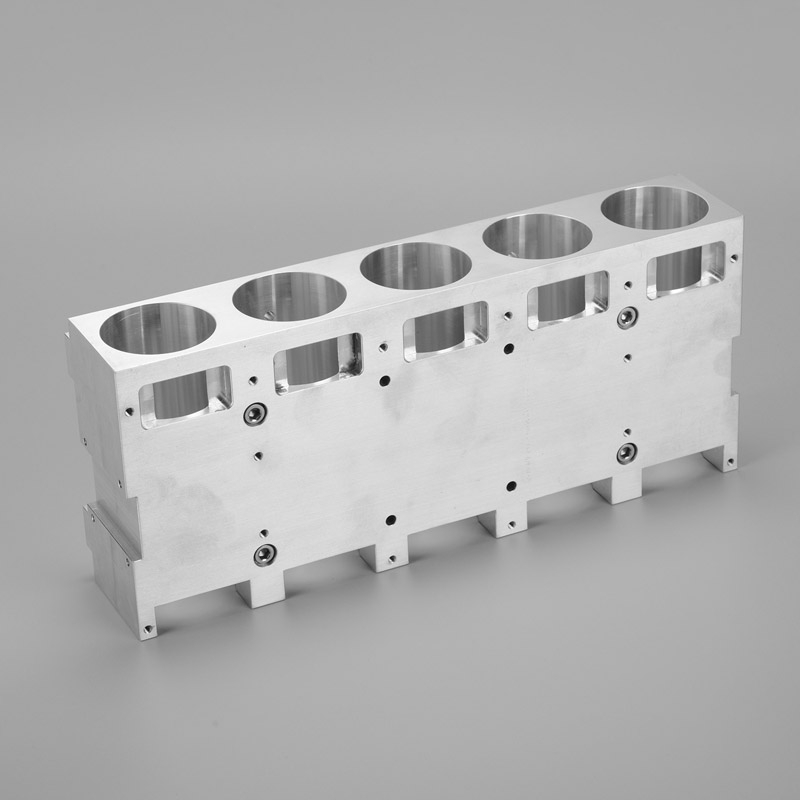
Precision machined aluminum parts refer to customized high-precision metal components manufactured through professional CNC turning, milling, drilling, grinding, die-casting finishing and secondary precision processing.
Precision machined aluminum parts | What are precision machined aluminum parts?Ultimate Guide to ADC12 Custom Components
Precision CNC machined automotive engine parts refer to customized high-precision engine core components manufactured through professional CNC milling, turning, drilling, tapping and secondary finishing processes, mainly using ADC12 aluminum alloy as the base material.
Automotive engine parts | What are precision cnc machined automotive engine parts?
Parts machining services refer to professional customized manufacturing solutions that process raw metal and plastic materials into high-precision finished components through subtractive manufacturing technologies such as CNC milling, turning, drilling, grinding, and die-casting finishing.
Parts machining services | What are parts machining services?Complete Guide to Precision Component Processing


