HOT PRODUCTS
What does cnc machining stand for? A Complete Guide for Beginners
2026-03-28
What Does CNC Machining Stand For? A Complete Guide for Beginners
Table of Contents
- Introduction: Why CNC Machining Matters in Modern Manufacturing
- What Does CNC Machining Stand For? (Core Definition)
- Breaking Down the Acronym: Each Letter Explained
- The Key Role of CNC Machining (Why It’s Irreplaceable)
- Expert Insights: The Impact of CNC Machining on Industry
- FAQs: Common Questions About CNC Machining
- Conclusion: CNC Machining as the Future of Precision
Introduction: Why CNC Machining Matters in Modern Manufacturing
In the world of precision manufacturing, CNC machining is a term you’ll hear constantly—but many beginners wonder: what does CNC machining stand for? This technology has revolutionized how we produce parts, from small components in medical devices to large structures in aerospace. Unlike manual machining, CNC machining offers unmatched accuracy, consistency, and efficiency, making it the backbone of modern production. This blog will answer the core question of what CNC machining stands for, break down its key components, explain its critical role, share expert perspectives, and address common industry questions—all in clear, accessible language.
What Does CNC Machining Stand For? (Core Definition)
Let’s cut to the chase: CNC machining stands for Computer Numerical Control machining. At its core, it is a manufacturing process that uses computerized controls and pre-programmed software to operate machine tools (such as mills, lathes, routers, and grinders). The key difference between CNC machining and manual machining is that human intervention is minimized—instead, the computer executes precise, repeatable movements to shape raw materials into finished parts. But to truly understand CNC machining, we need to break down each letter of the acronym, as each component plays a critical role in its functionality.
Breaking Down the Acronym: Each Letter Explained
The acronym CNC is made up of three key letters, each representing a fundamental part of the technology. Understanding each component will help you grasp why CNC machining is so powerful and versatile.
1. C: Computer
Core Role
The Computer is the "brain" of CNC machining. It runs specialized software (CAD/CAM software) that stores the design and machining instructions. The computer interprets the pre-programmed code (G-code or M-code) and sends precise signals to the machine tool, dictating every movement—from the speed of the cutting tool to its position and depth of cut. Without the computer, CNC machining would not be possible; it eliminates human error and ensures consistent results across every part.
2. N: Numerical
Core Role
The Numerical component refers to the use of numerical values (coordinates) to control the machine’s movements. These coordinates (X, Y, Z axes, and sometimes additional axes) define the exact position of the cutting tool relative to the workpiece. Every movement is measured in precise increments (often to the micron level), ensuring that the finished part meets tight dimensional tolerances. This numerical control is what makes CNC machining far more accurate than manual machining, where measurements rely on human judgment.
3. C: Control
Core Role
The Control is the interface between the computer and the machine tool. It translates the numerical code into physical movements, regulating the machine’s motors, cutting tools, and feed rates. Modern CNC controls are user-friendly, allowing operators to load programs, adjust settings, and monitor the machining process in real time. The control system also includes safety features to prevent errors, such as emergency stop buttons and tool collision detection.
The Key Role of CNC Machining (Why It’s Irreplaceable)
Now that we know what CNC machining stands for, it’s important to understand its core role in manufacturing. CNC machining is not just a "better" way to make parts—it’s a transformative technology that solves many of the limitations of manual machining. Below are its most critical functions and benefits:
1. Unmatched Precision and Consistency
CNC machining delivers micron-level precision, meaning parts are produced with almost no variation between batches. This is critical for industries like aerospace, medical, and automotive, where even the smallest deviation can lead to product failure. Unlike manual machining, where human fatigue or error can affect quality, CNC machines execute the same program perfectly every time.
2. Increased Efficiency and Productivity
CNC machines can operate 24/7 with minimal human supervision, significantly increasing production output. They also reduce setup time between jobs, as programs can be stored and loaded quickly. This efficiency translates to lower production costs and faster turnaround times—key advantages in competitive industries.
3. Versatility in Material and Design
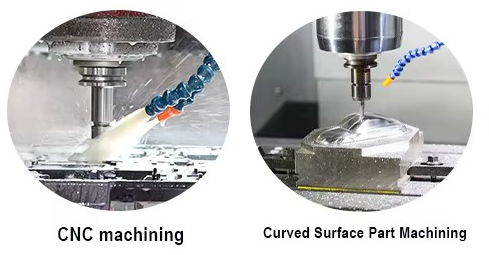
CNC machining can work with a wide range of materials, including metals (steel, aluminum, titanium), plastics, wood, and composites. It also handles complex designs that would be impossible or extremely time-consuming to produce manually, such as intricate 3D shapes, curved surfaces, and detailed engravings.
4. Reduced Waste and Cost Savings
By minimizing errors and optimizing material usage, CNC machining reduces waste. It also lowers labor costs, as fewer operators are needed to run multiple machines. Additionally, the ability to recondition tools and reuse programs further cuts down on expenses over time.
Expert Insights: The Impact of CNC Machining on Industry
To gain deeper perspective, we spoke with Jennifer Lee, a CNC machining specialist with 15+ years of experience in automotive and aerospace manufacturing, and a certified trainer for CNC operators. Here’s her take on what CNC machining stands for and its industry impact:
“When people ask ‘what does CNC machining stand for,’ I always emphasize that it’s more than just Computer Numerical Control—it’s a shift from manual to automated precision. The ‘Numerical’ part is often overlooked, but it’s the foundation of CNC’s accuracy. Before CNC, we relied on manual measurements and hand-eye coordination, which limited how precise and consistent we could be. Today, CNC machining allows us to produce parts that are identical, reliable, and complex—something that was unthinkable just a few decades ago. It’s not just a tool; it’s a catalyst for innovation in manufacturing. For beginners, understanding the acronym is the first step to appreciating how CNC has transformed industries from medical devices to space exploration.”
Jennifer adds: “One common misconception is that CNC machining replaces human operators. That’s not true—operators are still critical for programming, monitoring, and maintaining the machines. CNC simply takes over the repetitive, error-prone tasks, allowing humans to focus on creativity and problem-solving.”
FAQs: Common Questions About CNC Machining
Q1: What does CNC machining stand for, in simple terms?
A: In simple terms, CNC machining stands for Computer Numerical Control machining. It’s a process where a computer controls machine tools to make precise, consistent parts using pre-programmed instructions.
Q2: Is CNC machining the same as 3D printing?
A: No. CNC machining is a subtractive manufacturing process (it removes material from a raw block to create a part), while 3D printing is an additive process (it builds parts layer by layer). CNC is better for high-precision, high-strength parts, while 3D printing is ideal for complex prototypes and low-volume production.
Q3: What is G-code, and how does it relate to CNC machining?
A: G-code is the standard programming language used in CNC machining. It contains numerical coordinates and commands that tell the CNC machine how to move, cut, and operate. Without G-code, the computer cannot communicate with the machine tool—making it a critical part of the CNC process.
Q4: What industries use CNC machining the most?
A: CNC machining is used in almost every manufacturing industry, but the most common include: aerospace (for aircraft components), automotive (engine parts, gears), medical (surgical tools, implants), electronics (circuit boards), and defense (weapons components).
Q5: Do I need special training to operate a CNC machine?
A: Yes. Operating a CNC machine requires training in programming (G-code, CAD/CAM software), machine setup, and safety protocols. Many technical schools and manufacturing companies offer CNC training programs to help operators master the skills needed.
Q6: What is the difference between CNC machining and manual machining?
A: The main difference is control: manual machining relies on human operators to guide the tool and make measurements, while CNC machining uses a computer to control the tool. This makes CNC more accurate, consistent, and efficient—especially for high-volume or complex parts.
Conclusion: CNC Machining as the Future of Precision
Now that you know what CNC machining stands for (Computer Numerical Control machining) and understand its key components and role, it’s clear why this technology is the cornerstone of modern manufacturing. From the computer that runs the program to the numerical coordinates that ensure precision and the control system that brings it all together, every part of the CNC acronym works in harmony to deliver high-quality, consistent parts.
Whether you’re a beginner learning the basics or an industry professional looking to refresh your knowledge, understanding CNC machining’s core definition and purpose is essential. As expert Jennifer Lee noted, CNC is more than just a process—it’s a driver of innovation, enabling industries to push the boundaries of what’s possible. As technology advances, CNC machining will continue to evolve, becoming even more precise, efficient, and versatile—solidifying its place as the future of precision manufacturing.
Custom machined parts | How is custom machined parts? A Complete Guide to Precision, Advantages & FAQs
What does cnc machining mean? A Complete Guide for Beginners & Professionals
Related Article
CNC aluminium parts are high-precision industrial components fabricated through computer numerical control (CNC) machining technology, including milling, turning, drilling, tapping and secondary precision finishing.
CNC aluminium parts | What are cnc aluminium parts and how are they manufactured?
Precision machined aluminum parts refer to customized high-precision metal components manufactured through professional CNC turning, milling, drilling, grinding, die-casting finishing and secondary precision processing.
Precision machined aluminum parts | What are precision machined aluminum parts?Ultimate Guide to ADC12 Custom Components
Precision CNC machined automotive engine parts refer to customized high-precision engine core components manufactured through professional CNC milling, turning, drilling, tapping and secondary finishing processes, mainly using ADC12 aluminum alloy as the base material.
Automotive engine parts | What are precision cnc machined automotive engine parts?
Parts machining services refer to professional customized manufacturing solutions that process raw metal and plastic materials into high-precision finished components through subtractive manufacturing technologies such as CNC milling, turning, drilling, grinding, and die-casting finishing.
Parts machining services | What are parts machining services?Complete Guide to Precision Component Processing