
HOT PRODUCTS
Die casting applications | What are the application fields of die-casting products?
What are the application fields of die-casting products?
Table of Contents
- 1. Brief Introduction to Die Casting & Its Core Advantages
- 2. Key Application Fields of Die-Casting Products (Focused)
- 3. Key Roles of Die-Casting Products in Each Application Field
- 4. Core Benefits of Die-Casting Products in Application Fields
- 5. Expert Opinions on Die-Casting Applications
- 6. FAQs About Die-Casting Product Applications
- 7. Conclusion
1. Brief Introduction to Die Casting & Its Core Advantages
Die casting is a high-efficiency metal forming process that involves forcing molten metal (such as aluminum, zinc, magnesium, or copper alloys) into a precision mold under high pressure, producing parts with tight dimensional tolerances, smooth surface finishes, and complex geometries. Unlike other manufacturing processes, die casting excels in mass production, balancing cost-effectiveness, durability, and performance—making it indispensable across multiple industries. The core advantage of die-casting products lies in their ability to combine lightweight design with high strength, while enabling rapid production cycles and minimal material waste[3]. From small electronic components to large industrial parts, die-casting products have become a cornerstone of modern manufacturing, powering innovation in diverse application fields. Most die castings are made from non-ferrous metals, and the process is especially suited for high-volume production of small-to-medium-sized castings, outpacing other casting methods in output[1].
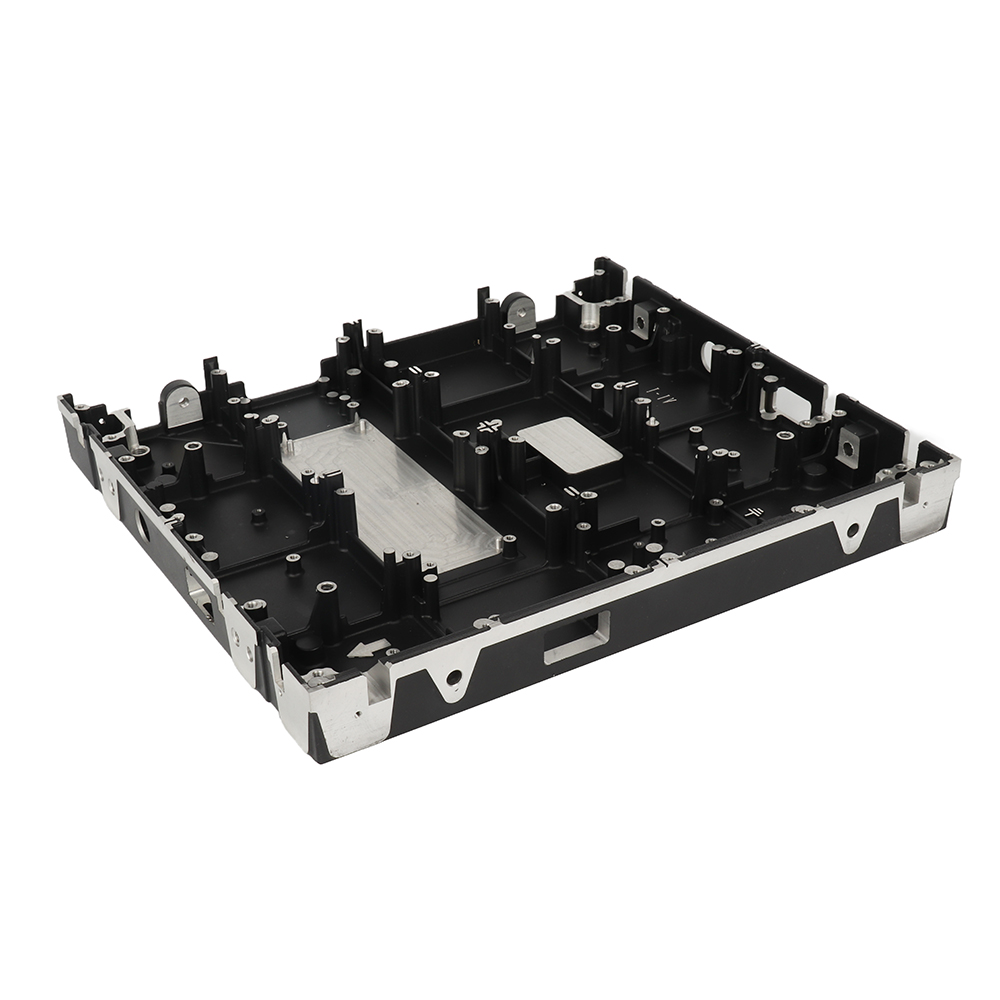
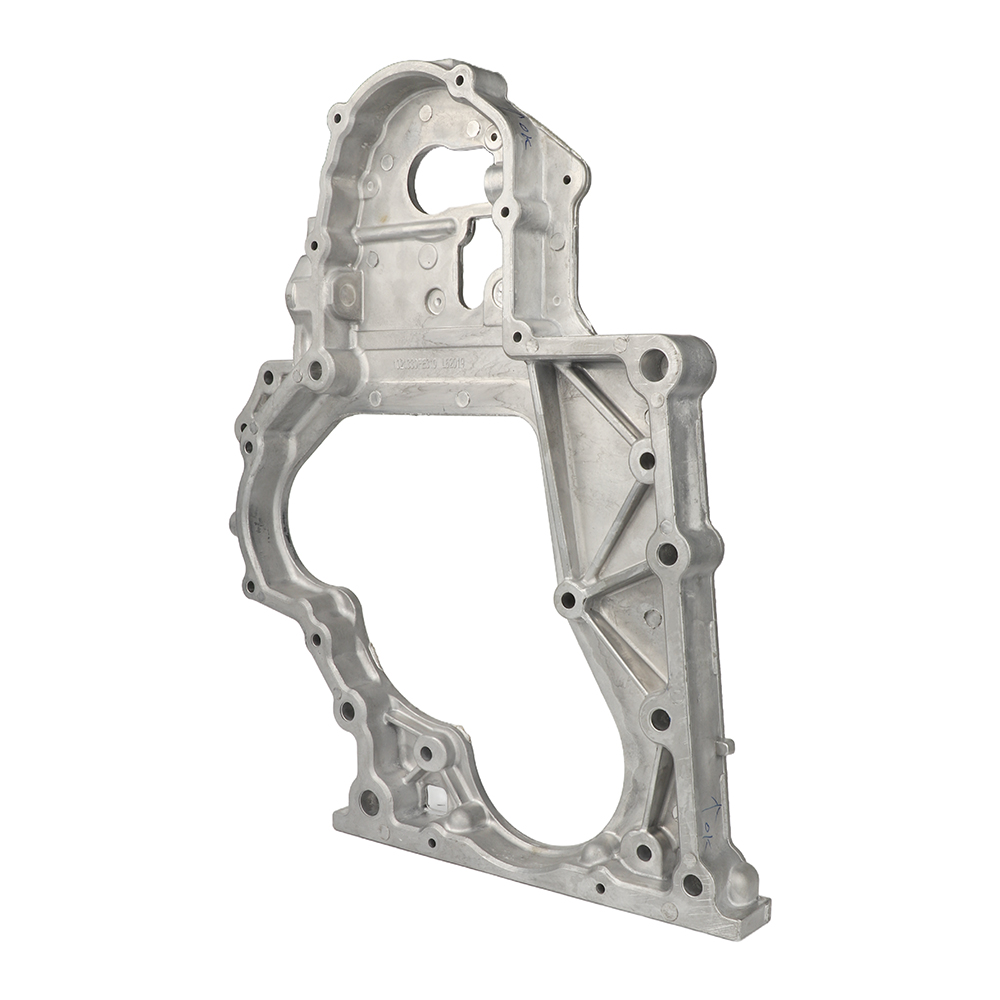
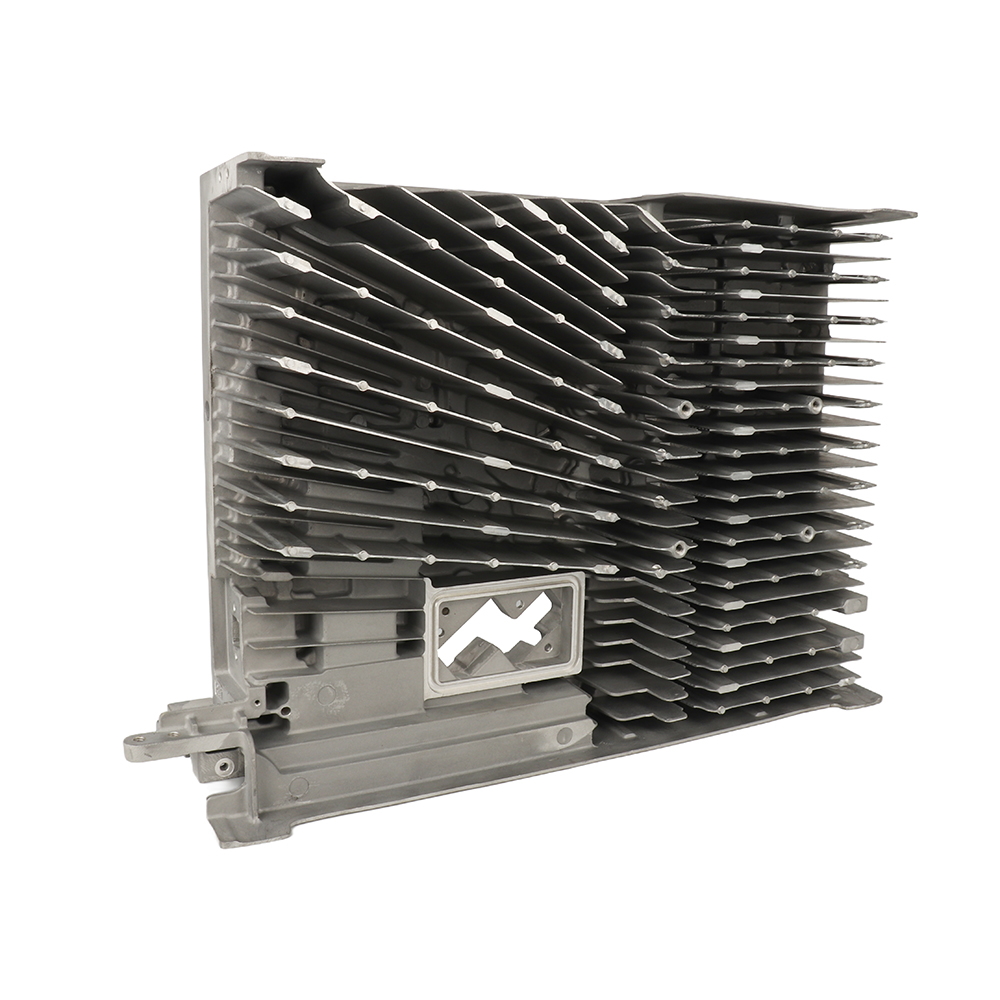
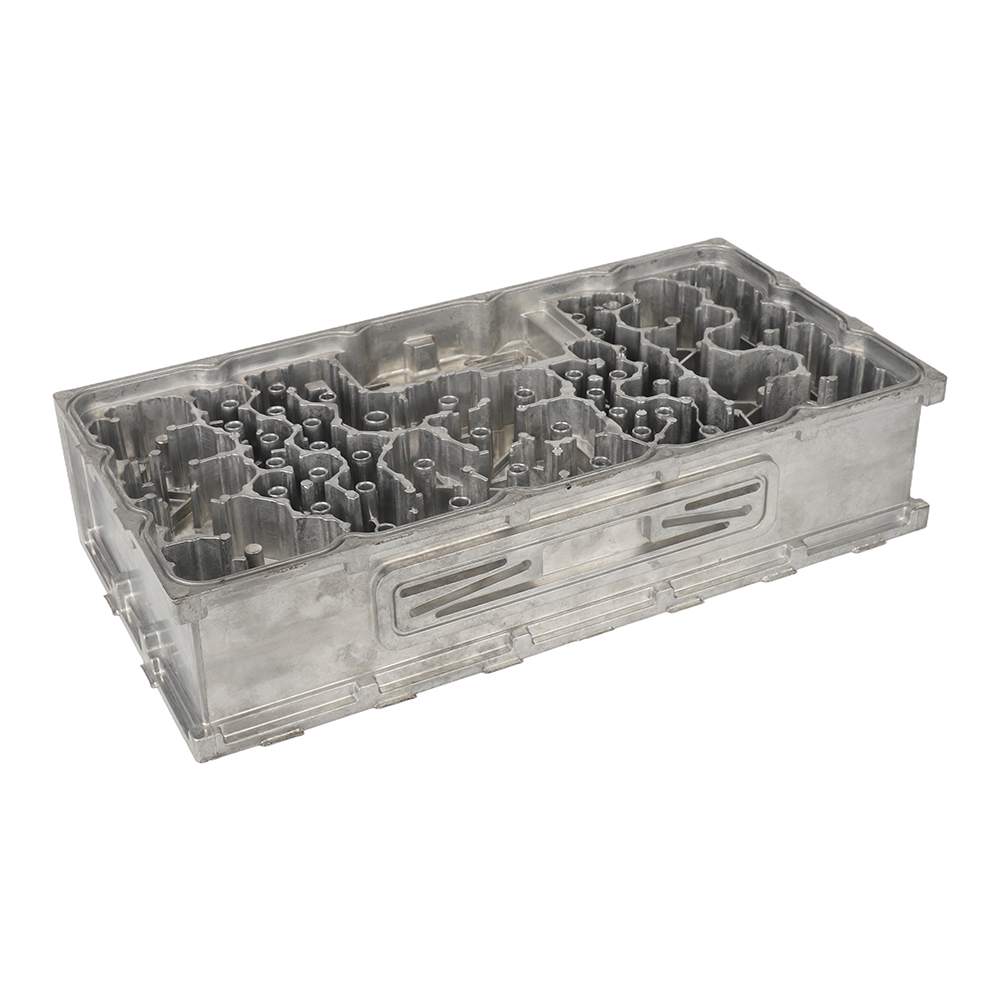
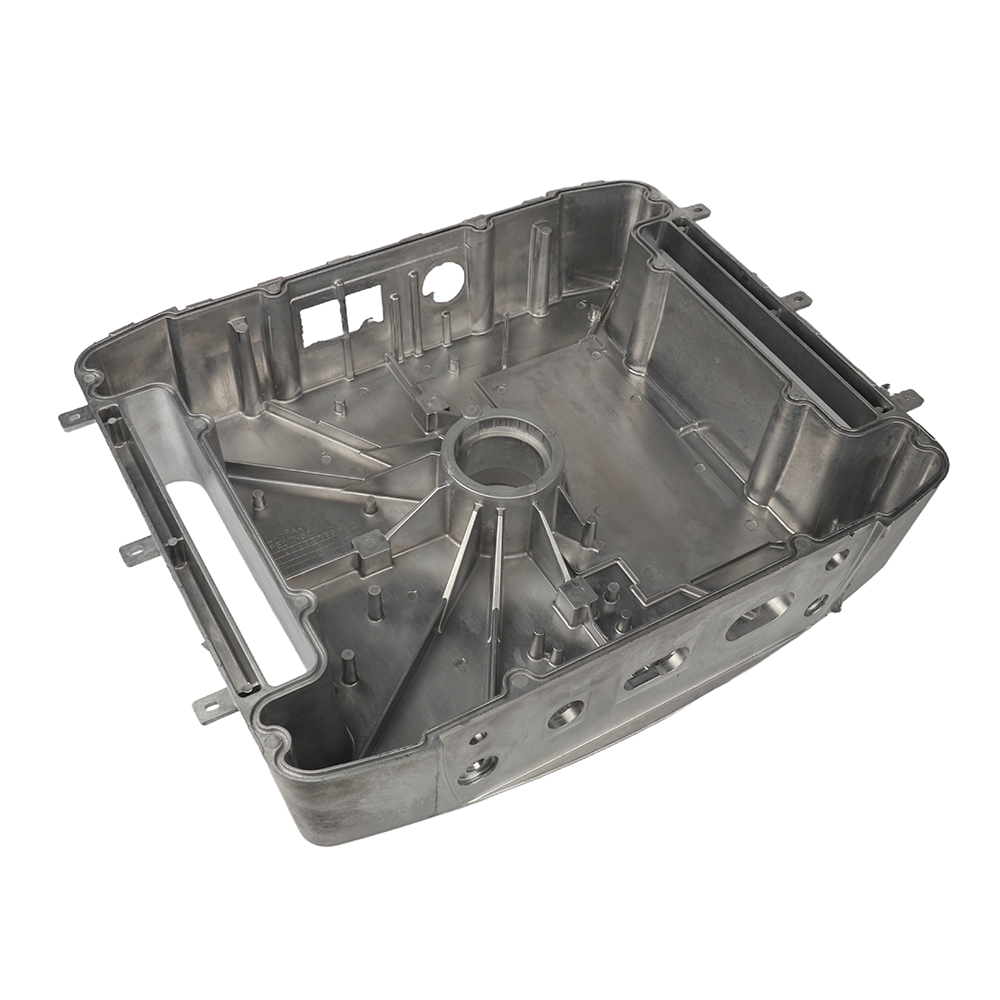
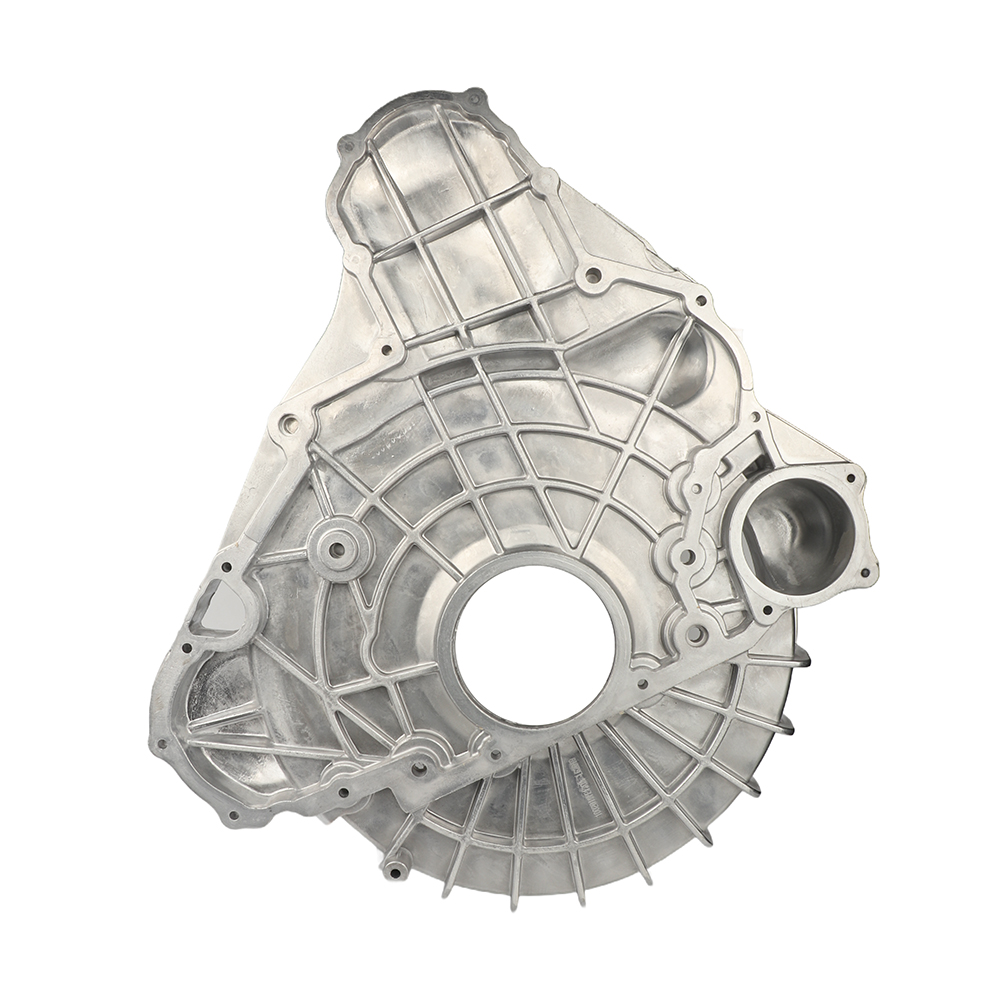
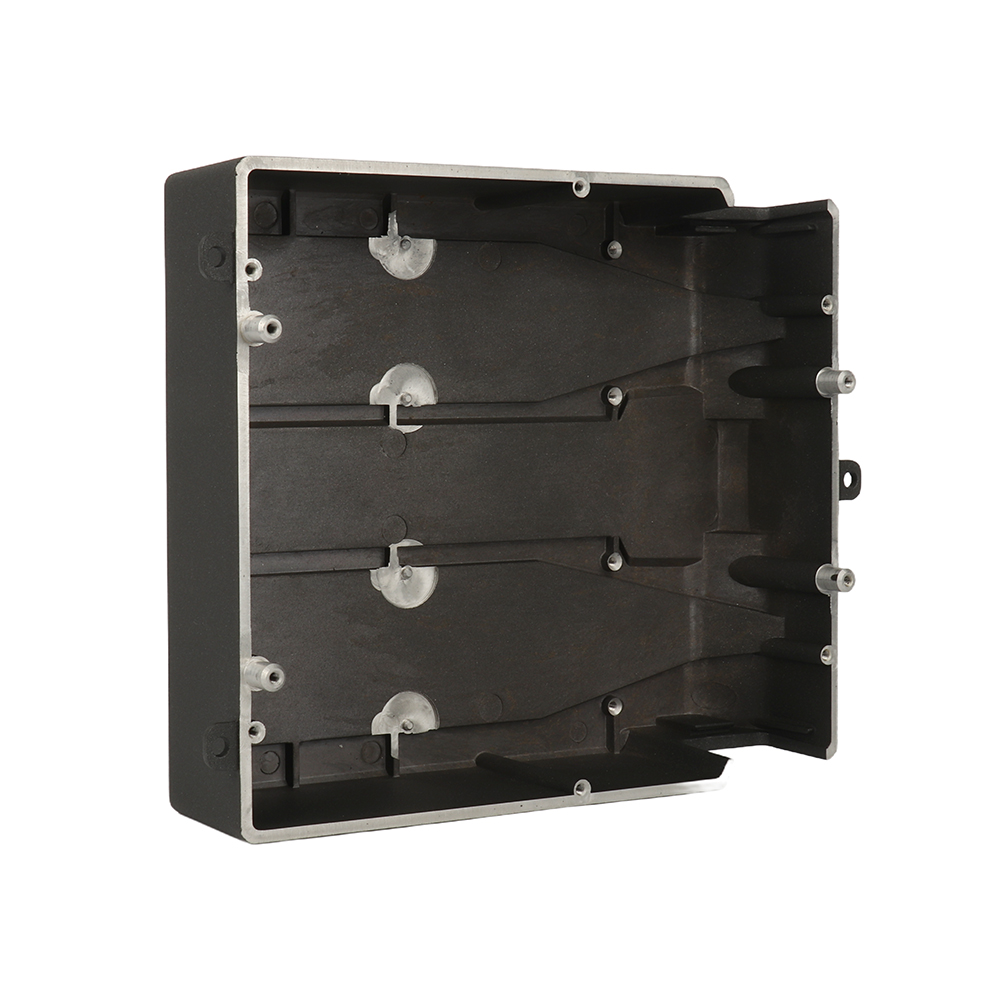
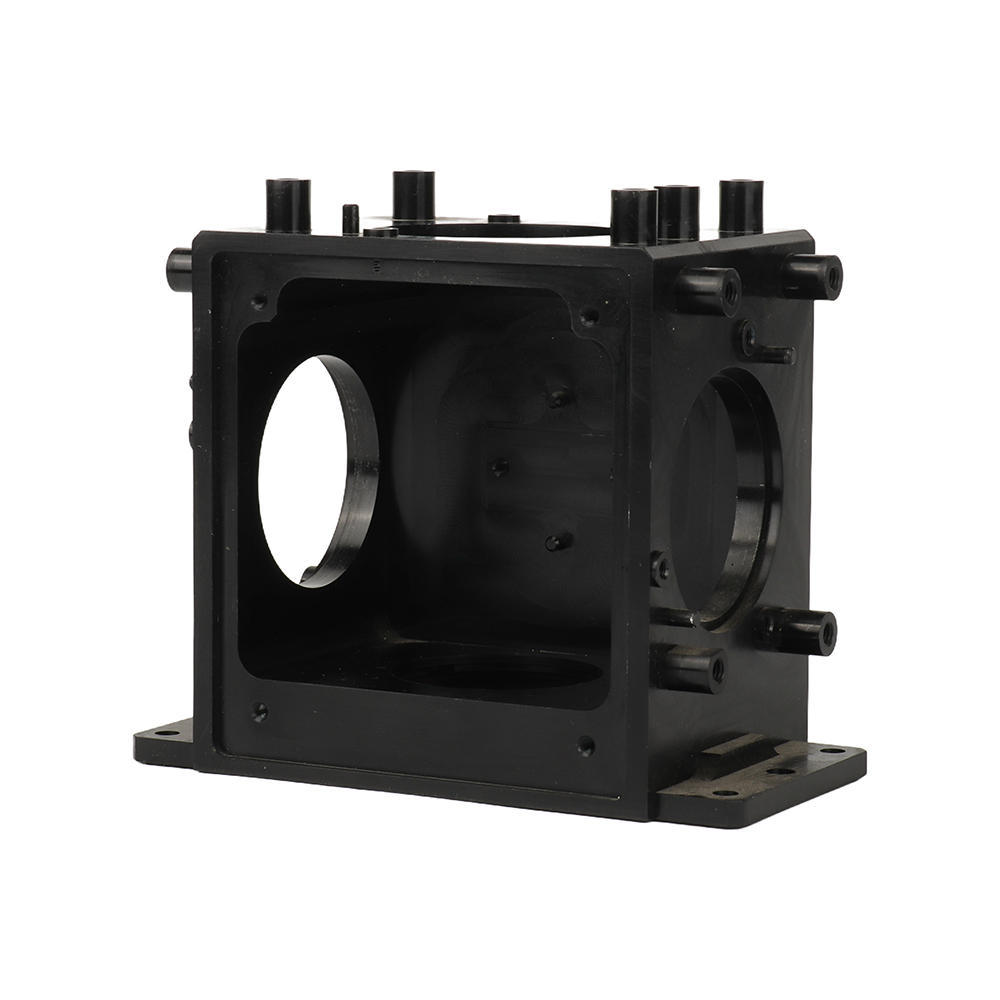
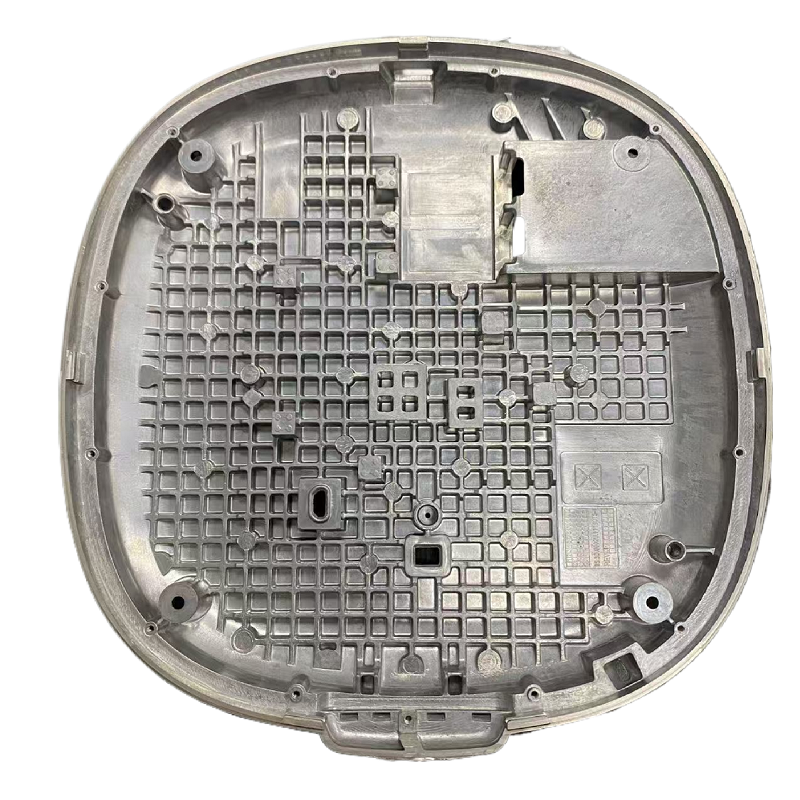
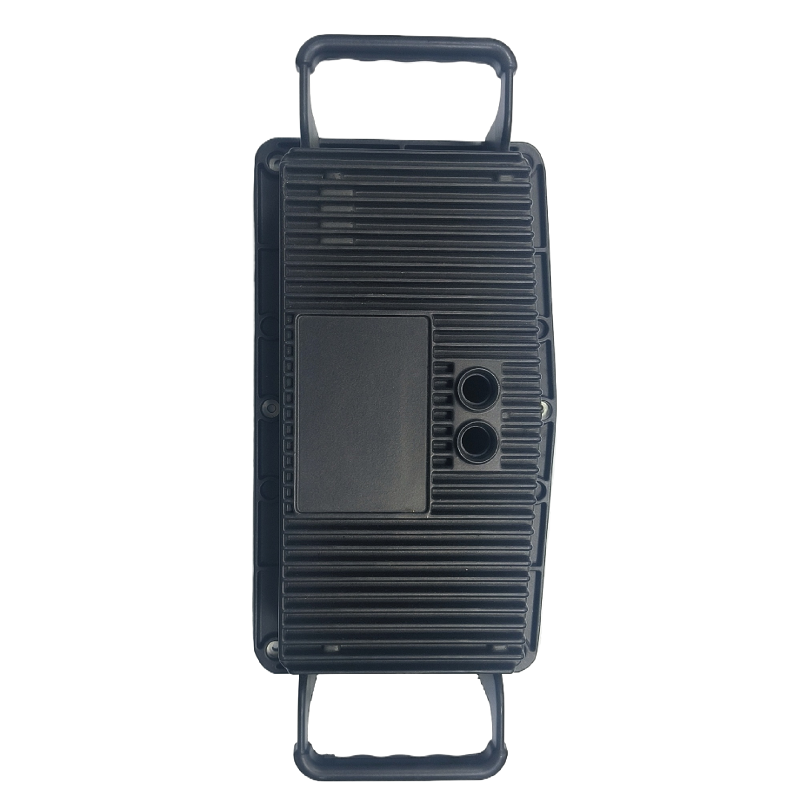
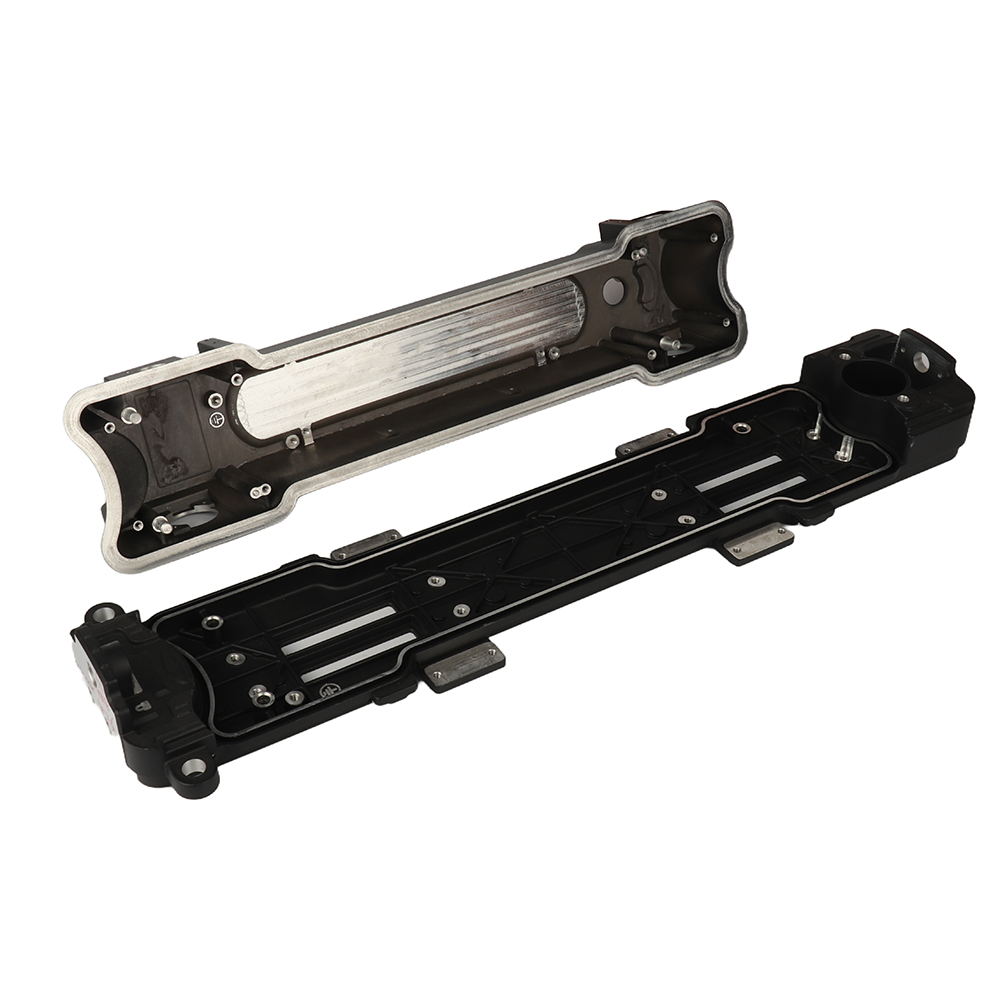
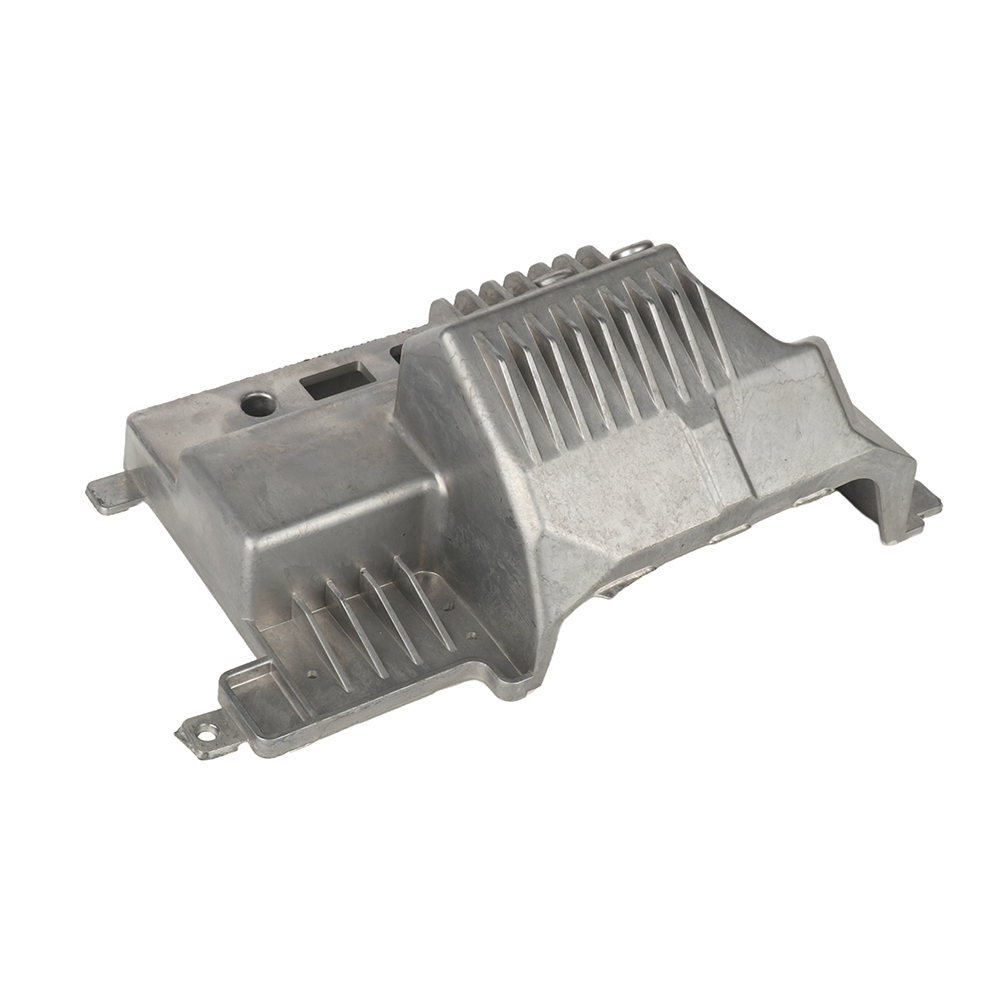
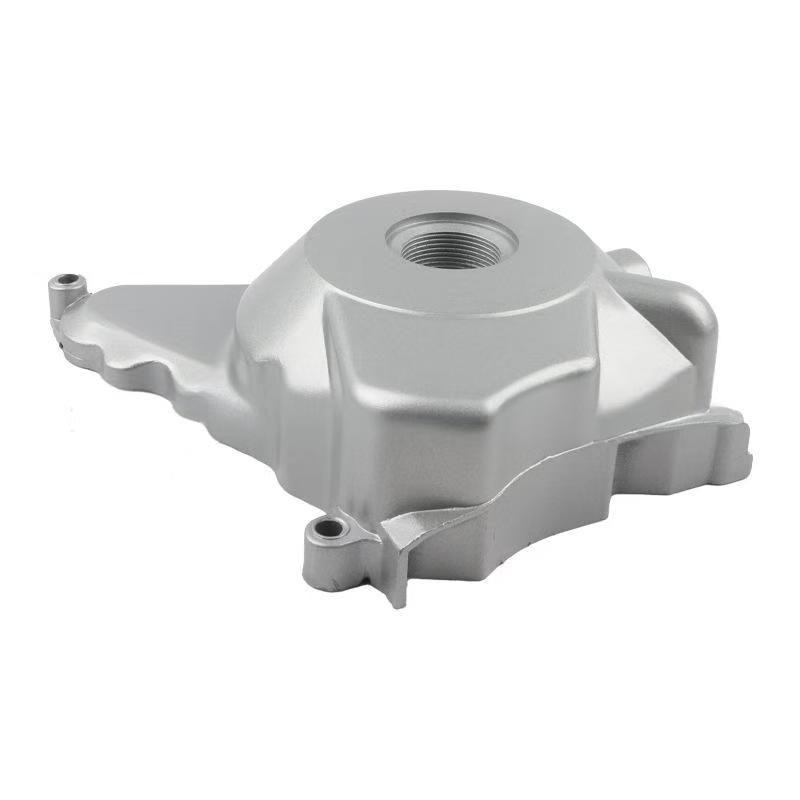
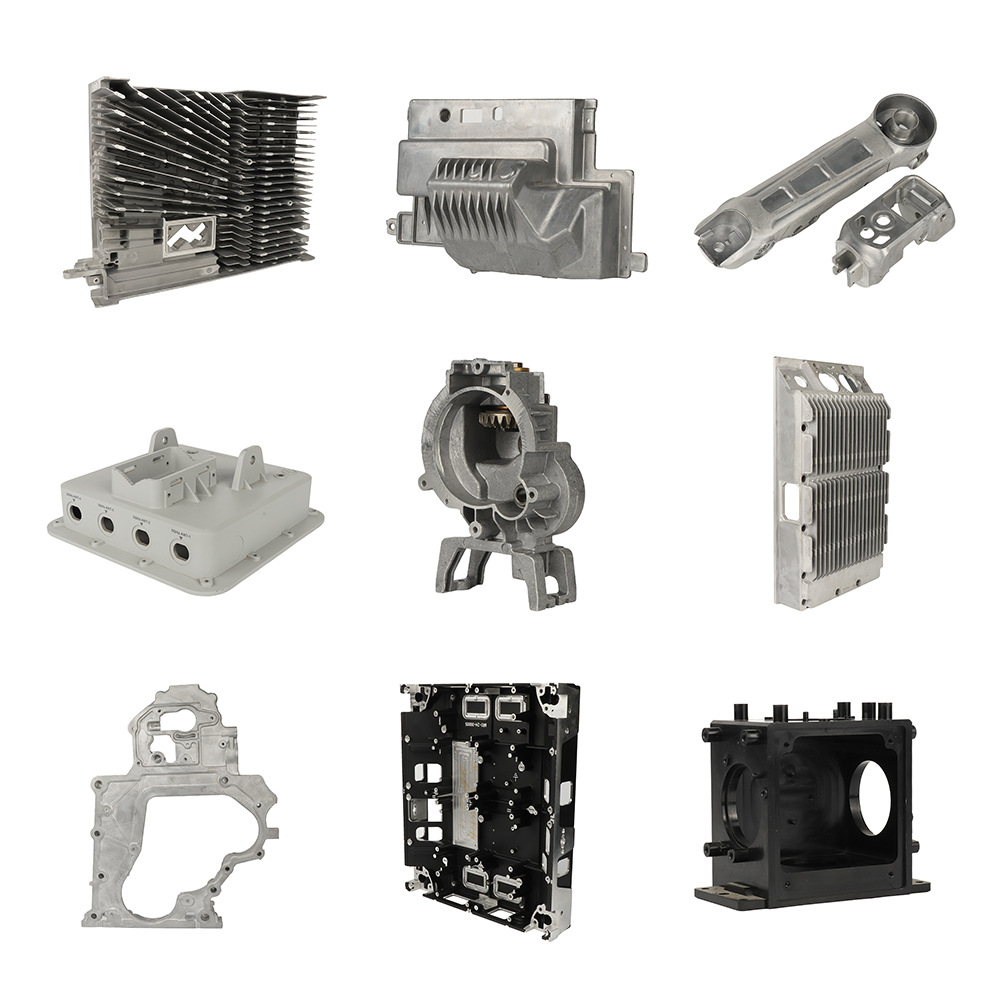
Die-cast automotive components: engine block, battery enclosure, and motor housing
2. Key Application Fields of Die-Casting Products (Focused)
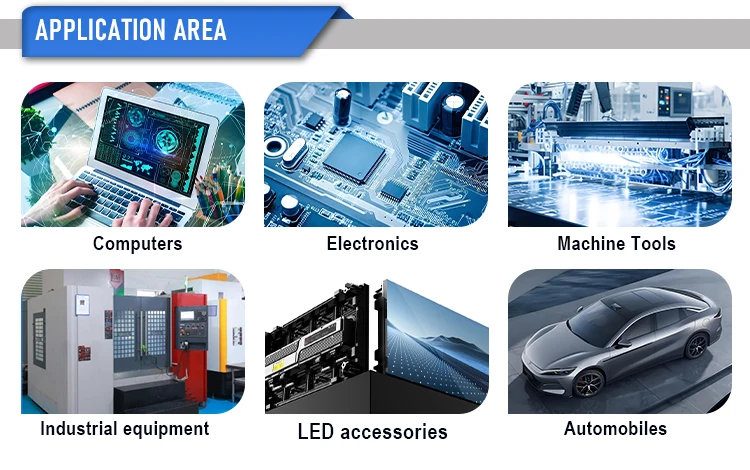
Die-casting products have penetrated nearly every corner of modern industry, thanks to their unique combination of precision, efficiency, and cost-effectiveness. Below are the most prominent application fields, with a focus on practical scenarios and typical products.
2.1 Automotive Industry (Largest Application Field)
The automotive sector is the biggest consumer of die-cast parts, accounting for over half of all die-cast products globally[3]. With the push for lightweight vehicles to meet fuel efficiency and emissions standards, die casting has become indispensable in automotive manufacturing. Common die-cast products here include engine blocks, cylinder heads, transmission cases, chassis components, steering wheels, and battery housings for electric vehicles (EVs).
2.2 Consumer Electronics Industry
The consumer electronics industry demands miniaturization, precision, and aesthetic appeal, which die casting perfectly delivers. Die-cast parts are widely used in smartphones, laptops, tablets, cameras, and home appliances. Typical products include smartphone middle frames, laptop casings, camera lens holders, and TV base brackets—mostly made of aluminum or zinc alloys for lightweight and corrosion resistance[5].
2.3 Aerospace & Defense Industry
In the aerospace and defense fields, die-casting products play a critical role in ensuring high reliability and lightweight performance under extreme conditions. Aluminum and magnesium alloys are commonly used for aircraft engine components, drone frames, weapon mounts, and optics housings[3]. These parts require strict dimensional accuracy and high strength to withstand high altitudes, pressure, and harsh environments.
2.4 Industrial Machinery & Equipment Industry
Industrial machinery relies on die-cast parts for their durability and wear resistance. Applications include pump bodies, valve cores, gear boxes, hydraulic components, and tool housings. Die casting enables the production of complex-shaped parts with tight tolerances, reducing assembly time and improving the overall efficiency of machinery[5].
2.5 Medical Equipment Industry
The medical equipment industry requires parts with high precision, sterilizability, and biocompatibility. Die-cast parts are used in medical devices such as surgical instruments, diagnostic equipment casings, and hospital bed components—usually made of stainless steel or aluminum alloys to meet strict medical standards[5].
3. Key Roles of Die-Casting Products in Each Application Field
Die-casting products do not just serve as "components"; they play a core role in optimizing product performance, reducing costs, and promoting industrial innovation. Here’s their key role in each major field:
3.1 Automotive Industry: Driving Lightweight and Efficiency
Die-cast aluminum engine blocks and cylinder heads reduce vehicle weight by up to 120 pounds compared to iron parts, improving fuel efficiency to 41 mpg in some models[3]. Integrated cooling passages in die-cast components enhance engine performance, while die-cast battery housings for EVs ensure structural stability and heat dissipation, extending battery life. Structural components like crossmembers and A-pillars made of die-cast aluminum improve crash resistance with yield strengths above 220 MPa post-heat treatment[3].
3.2 Consumer Electronics Industry: Ensuring Precision and Aesthetics
Die-cast middle frames of smartphones ensure tight fitting with screens and batteries, improving the overall structural stability of the device. The smooth surface finish of die-cast parts eliminates the need for complex secondary processing, reducing production costs and ensuring a sleek appearance[7]. Miniature die-cast components (e.g., camera lens holders) meet the demand for miniaturization, enabling the design of thinner and lighter electronic products.
3.3 Aerospace & Defense Industry: Guaranteeing Reliability and Safety
Die-cast aircraft engine components (e.g., compressor housings) use vacuum die casting to ensure porosity below 1%, critical for reliability at high altitudes[3]. Lightweight die-cast drone frames reduce overall weight, enabling longer flight times and better stability. Die-cast weapon mounts and optics housings provide high structural strength, ensuring stability during use in harsh defense environments[3].
3.4 Industrial Machinery & Equipment Industry: Enhancing Durability and Productivity
Die-cast hydraulic components and pump bodies have excellent sealing performance, reducing leakage and improving the efficiency of machinery. Wear-resistant die-cast gear boxes extend the service life of industrial equipment, reducing maintenance costs. The rapid production cycle of die casting ensures a stable supply of parts, supporting continuous operation of industrial production[7].
3.5 Medical Equipment Industry: Ensuring Precision and Safety
Precision die-cast surgical instruments ensure accurate operation, reducing the risk of medical errors. Die-cast diagnostic equipment casings provide good shielding performance, preventing electromagnetic interference and ensuring the accuracy of test results. Biocompatible die-cast parts meet strict medical standards, avoiding adverse reactions during use[5].
4. Core Benefits of Die-Casting Products in Application Fields
Compared with other manufacturing processes (such as forging, stamping, and machining), die-casting products offer unique advantages in various application fields, bringing tangible benefits to enterprises and industries:
4.1 Cost-Effectiveness for Mass Production
Die casting has a high production efficiency, with cycle times as fast as 15 to 60 seconds per part, enabling production rates of 500 to 1,000 parts per hour for smaller components[7]. The process reduces or eliminates secondary machining operations, lowering labor and material costs. Although the initial investment in die casting equipment and molds is high, the low incremental cost per item makes it highly cost-effective for high-volume production[1].
4.2 Excellent Precision and Consistency
Die-casting products have tight dimensional tolerances (typically ±0.05 mm) and smooth surface finishes (Ra 1–2.5 micrometres), ensuring consistent product quality[1][5]. This reduces the need for post-processing and improves the assembly accuracy of final products, which is crucial for industries such as automotive and electronics that require high uniformity.
4.3 Lightweight Design with High Strength
Die-cast aluminum, magnesium, and zinc alloys combine lightweight properties with high strength—magnesium alloys, for example, have an excellent strength-to-weight ratio, making them ideal for lightweight applications[4]. This not only reduces the weight of final products (e.g., vehicles, aircraft, electronics) but also improves their performance and energy efficiency[3].
4.4 Flexibility in Design and Material Selection
Die casting supports the production of complex-shaped parts with intricate structures that are difficult to achieve with other processes[6]. A wide range of materials can be used, including aluminum, zinc, magnesium, and copper alloys, each with unique properties to meet the specific needs of different application fields[2]. For example, copper alloys are used for high-conductivity parts, while zinc alloys are ideal for miniature precision components[4].
4.5 Environmental Friendliness and Waste Reduction
Die casting generates minimal material waste, as excess metal can be recycled and reused (recycling rate >95%)[4]. The use of water-based lubricants instead of solvent-based ones reduces environmental pollution, while electric melting furnaces reduce carbon emissions by 60% compared to gas furnaces[4]. This aligns with the global trend of green manufacturing.
5. Expert Opinions on Die-Casting Applications
Industry experts have recognized the important role of die casting in promoting industrial development, and their insights provide valuable guidance for the future application of die-casting products:
5.1 Expert Opinion 1: Michael Johnson, Senior Automotive Manufacturing Engineer
"The automotive industry’s shift toward electrification has made die casting more critical than ever. Die-cast aluminum and magnesium parts not only reduce vehicle weight to extend EV range but also enable the integration of multiple components into a single part—like Tesla’s integrated rear floor, which reduces assembly time by 50% and costs by 40%[4]. In the next 5 years, we will see more large-scale integrated die-cast parts in automotive manufacturing, driving the innovation of die casting technology."
5.2 Expert Opinion 2: Sarah Chen, Aerospace Materials Specialist
"In the aerospace industry, reliability and lightweight performance are non-negotiable. Die casting, especially vacuum die casting, can produce high-precision parts with extremely low porosity, meeting the strict requirements of aircraft and drone components[3]. With the development of new die materials and additive manufacturing, die-cast parts will be able to withstand higher temperatures and pressures, expanding their application in aerospace engines and spacecraft."
5.3 Expert Opinion 3: David Lee, Die Casting Technology Consultant
"The core advantage of die casting lies in its ability to balance precision, efficiency, and cost. From consumer electronics to industrial machinery, die-casting products are becoming more integrated and intelligent. With the adoption of digital twin technology and AI-driven defect detection, the quality of die-cast parts will be further improved, and their application fields will continue to expand—especially in emerging industries like renewable energy and smart manufacturing[4]."
6. FAQs About Die-Casting Product Applications
Below are the most common questions about die-casting product applications, answered by industry experts to help you better understand the scope and value of die casting:
Q1: What materials are most commonly used for die-cast products in different application fields?
A: The choice of material depends on the application requirements. Aluminum alloys (e.g., ADC12, A380) are the most widely used, accounting for over 60% of global die-cast parts, suitable for automotive, electronics, and industrial machinery[4]. Zinc alloys (e.g., Zamak 3) are ideal for miniature precision parts (e.g., electronic components) due to their low melting point and excellent fluidity[2]. Magnesium alloys are used for lightweight applications (e.g., drone frames, EV parts), while copper alloys are used for high-conductivity components (e.g., motor end rings)[4].
Q2: Can die-cast products be used in high-temperature or high-pressure environments?
A: Yes. With the development of die casting technology (e.g., vacuum die casting, semi-solid die casting), die-cast parts can withstand high temperatures and pressures[4]. For example, aluminum-silicon alloy die-cast parts are used in aircraft engine components, which can withstand high temperatures above 300°C[3]. Vacuum die casting ensures low porosity, making die-cast parts suitable for high-pressure environments like hydraulic systems[4].
Q3: What is the minimum wall thickness of die-cast parts, and does it affect their application?
A: The minimum wall thickness depends on the material and part size. For aluminum alloys, the minimum wall thickness can be as thin as 0.3 mm in some cases[8]. This thin-wall capability enables the production of miniature components for consumer electronics, expanding the application scope of die casting. However, excessively thin walls may reduce structural strength, so the wall thickness is usually optimized based on the part’s functional requirements[8].
Q4: How does die casting compare to other manufacturing processes in terms of cost and efficiency?
A: Die casting has a higher initial investment in equipment and molds but lower per-unit costs for high-volume production[1]. Its production efficiency is much higher than forging and machining—die casting can produce hundreds of parts per hour, while machining can only produce a few[7]. Additionally, die casting reduces secondary processing, further lowering costs. For small-batch production, other processes (e.g., 3D printing) may be more cost-effective, but die casting is the best choice for mass production[6].
Q5: What are the future trends of die-casting product applications?
A: The future of die casting will focus on three directions: 1) Integration: Large-scale integrated die-cast parts will replace multiple assembled components, reducing costs and improving efficiency[4]. 2) Greenization: More environmentally friendly materials and processes (e.g., recycled alloys, electric melting) will be adopted to meet carbon neutrality goals[4]. 3) Intelligence: Digital twin, AI, and additive manufacturing will be integrated into die casting, improving product quality and production efficiency[4]. Die-cast parts will also expand into emerging fields like renewable energy (e.g., wind turbine components) and smart home appliances.
7. Conclusion
Die-casting products have become an indispensable part of modern manufacturing, with wide-ranging applications in automotive, consumer electronics, aerospace, industrial machinery, and medical equipment industries. Their key roles in optimizing product performance, ensuring reliability, and reducing costs, combined with core benefits like high precision, efficiency, and environmental friendliness, make them a preferred choice for many enterprises. With the continuous advancement of die casting technology and the insights of industry experts, the application fields of die-casting products will continue to expand, driving innovation and development across various industries. Whether it’s lightweight EV parts, precision electronic components, or high-reliability aerospace parts, die casting is shaping the future of manufacturing.
Customized service | What iscustom die casting service? A Complete Guide to Customized Solutions
Aluminum boxes for electronics | What is an aluminum enclosure? Focus on Aluminum Boxes for Electronics
Related Article


