
HOT PRODUCTS
EV battery housing | What is die-cast ev battery housing? A Complete Guide
What is Die-Cast EV Battery Housing? A Complete Guide
Table of Contents
- Introduction to Die-Cast EV Battery Housing
- Xinghang Precision Hardware: Your Trusted Die-Cast EV Battery Housing Supplier
- Application Fields of EV Battery Housing
- Product Image: General Die-Cast EV Battery Housing
- Pros and Cons Comparison of Die-Cast EV Battery Housing
- Key Benefits of Die-Cast EV Battery Housing
- Expert Opinion on Die-Cast EV Battery Housing
- Frequently Asked Questions (FAQs) About Die-Cast EV Battery Housing
- Conclusion: Trends in Aluminum Die Casting Industry & How to Choose a High-Quality Hardware Supplier
1. Introduction to Die-Cast EV Battery Housing
In the booming new energy vehicle (NEV) industry, the EV battery housing is a core structural component that directly determines the safety, stability, and performance of electric vehicle batteries. A die-cast EV battery housing refers to a high-precision, high-strength housing component made by die-casting technology, specifically designed to encapsulate and protect the power battery pack of electric vehicles. As the “protective shell” of the EV battery, it bears the dual responsibilities of physical protection and functional integration, playing an irreplaceable role in the safe operation of electric vehicles. Unlike traditional stamping or welding battery housings, die-cast EV battery housing adopts one-piece molding technology, which effectively solves the problems of poor sealing, low structural strength, and high production cost of traditional housings. This blog will comprehensively answer the question “What is die-cast EV battery housing?”, elaborate on its application fields, compare its pros and cons, highlight its core benefits, share expert insights, solve common industry doubts, and provide guidance on choosing high-quality suppliers.
2. Xinghang Precision Hardware: Your Trusted Die-Cast EV Battery Housing Supplier
When it comes to high-quality die-cast EV battery housing, Xinghang Precision Hardware is your reliable partner. We specialize in providing top-notch die casting to our customers. Our team of experts is dedicated to delivering high quality battery housing Die-Casting Parts. With advanced die-casting production lines, professional R&D teams, and strict quality control systems, we focus on the R&D, production, and customization of die-cast EV battery housing, committed to meeting the diverse needs of different customers in the new energy vehicle industry. Whether you need standard EV/EA Battery Housing Casting or customized battery housing castings tailored to your specific requirements, we can provide one-stop solutions with high precision, high quality, and competitive prices. Contact us today for a free quote.

3. Application Fields of EV Battery Housing
The EV battery housing is widely used in various fields related to electric vehicles, covering passenger cars, commercial vehicles, and special vehicles, and its application scenarios are constantly expanding with the development of the new energy industry. The main application fields are as follows:
3.1 Passenger Electric Vehicles
This is the most mainstream application field of die-cast EV battery housing. Whether it is pure electric sedans, SUVs, or hatchbacks, the power battery pack needs a high-quality die-cast housing to ensure safety and stability. For example, Tesla Model Y, NIO ET5, and other popular models all adopt die-cast aluminum battery housings, which not only reduce the overall weight of the vehicle but also improve the structural strength and collision resistance, effectively protecting the battery pack from external impact.
3.2 Commercial Electric Vehicles
Commercial electric vehicles, including electric buses, electric trucks, and electric logistics vehicles, have higher requirements for battery safety and durability due to their long operating time, heavy load, and complex operating environment. Thedie-cast EV battery housing with high strength, corrosion resistance, and good sealing can adapt to harsh working conditions such as high temperature, low temperature, and frequent vibration, ensuring the stable operation of the battery pack during long-term use, and is widely used in commercial electric vehicle production.
3.3 Special Electric Vehicles
Special electric vehicles, such as electric sanitation vehicles, electric engineering vehicles, and electric special vehicles for military use, have special functional requirements for battery housings. The die-cast EV battery housing can be customized according to the specific needs of different special vehicles, such as increasing the thickness of the housing to enhance impact resistance, or optimizing the structure to improve waterproof and dustproof performance, meeting the special application needs of various special electric vehicles.
3.4 Energy Storage Systems
With the rapid development of the energy storage industry, the EV battery housing is also widely used in energy storage systems (such as household energy storage, industrial energy storage, and grid energy storage). The die-cast battery housing can effectively protect the energy storage battery module from external environmental interference, ensure the safe and stable operation of the energy storage system, and improve the service life of the energy storage battery.
4. Product Image: General Die-Cast EV Battery Housing
4.1 General Die-Cast EV Battery Housing Image
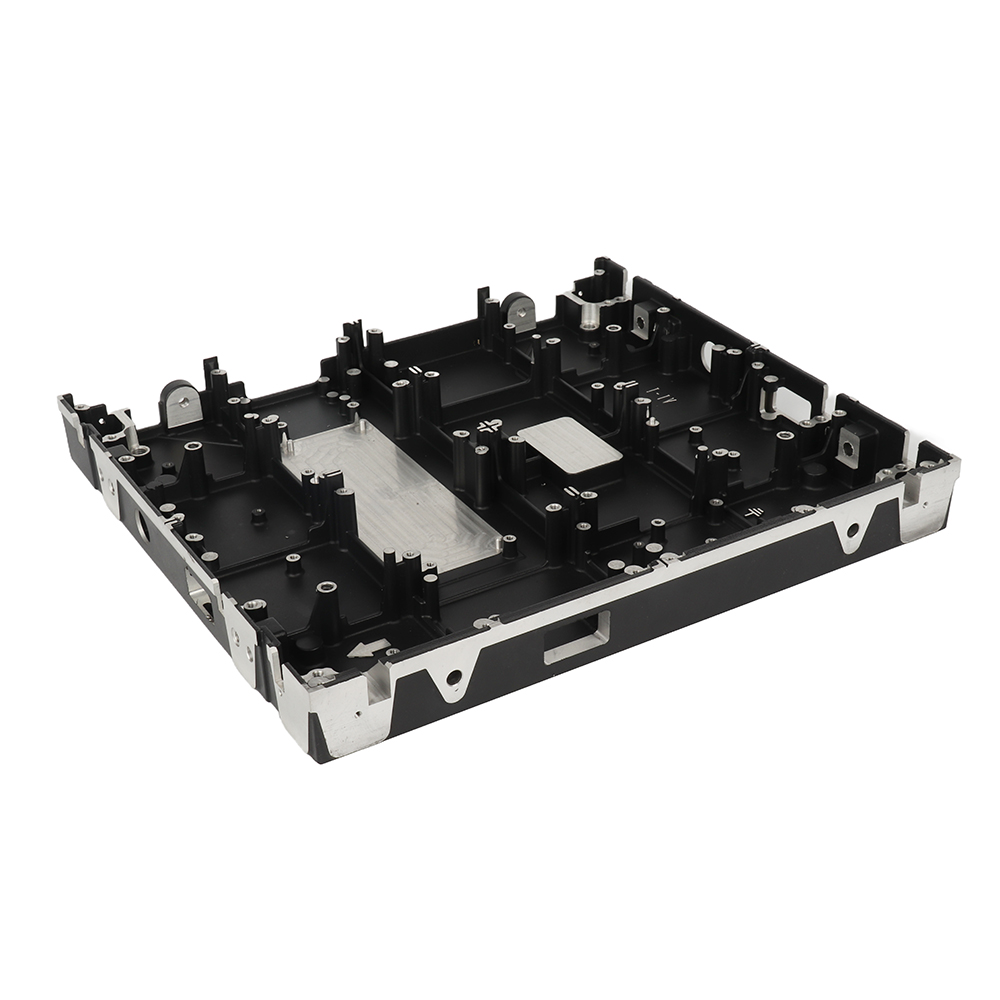
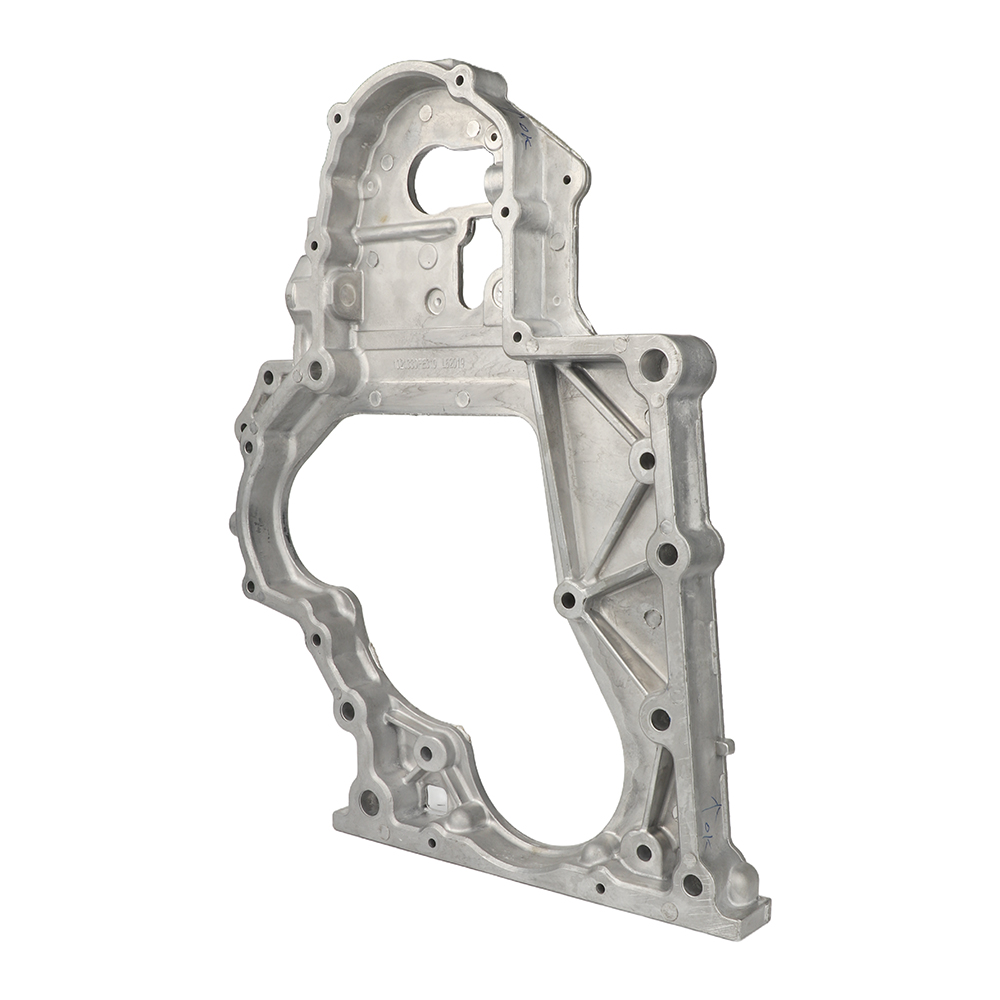
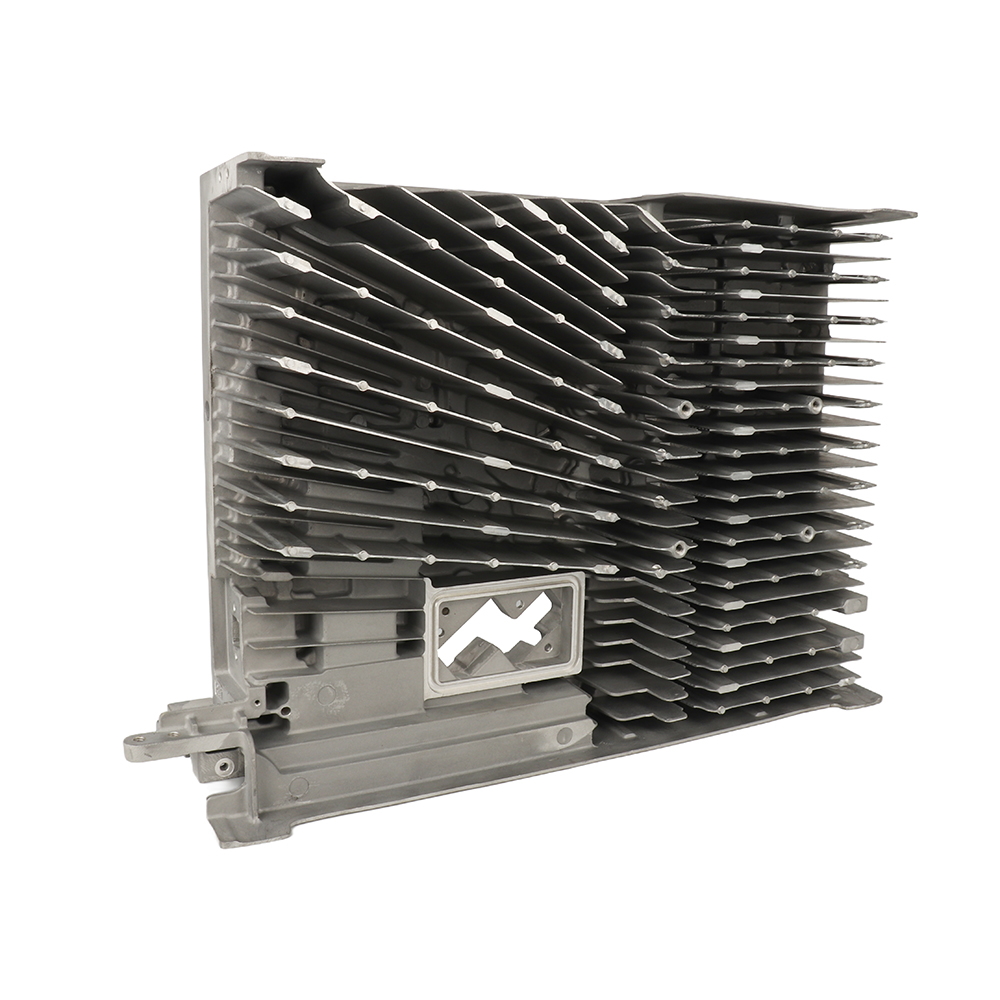
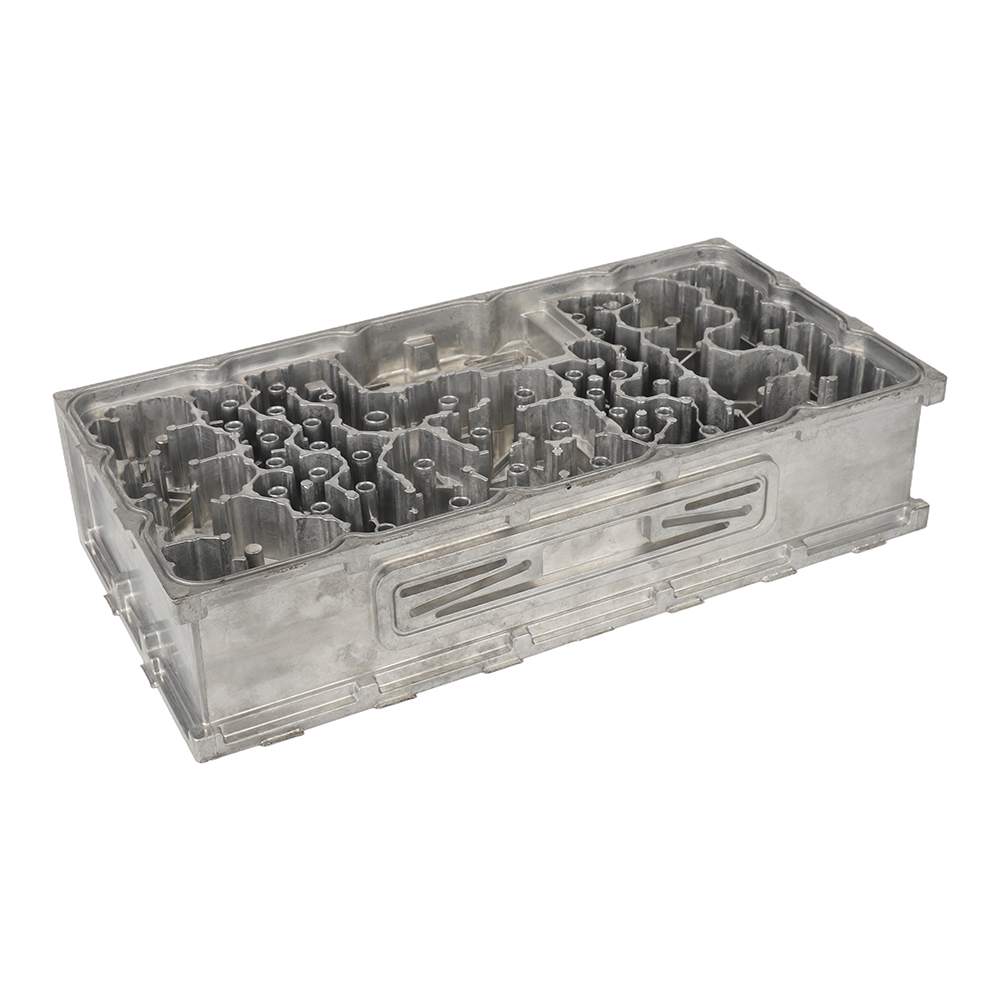
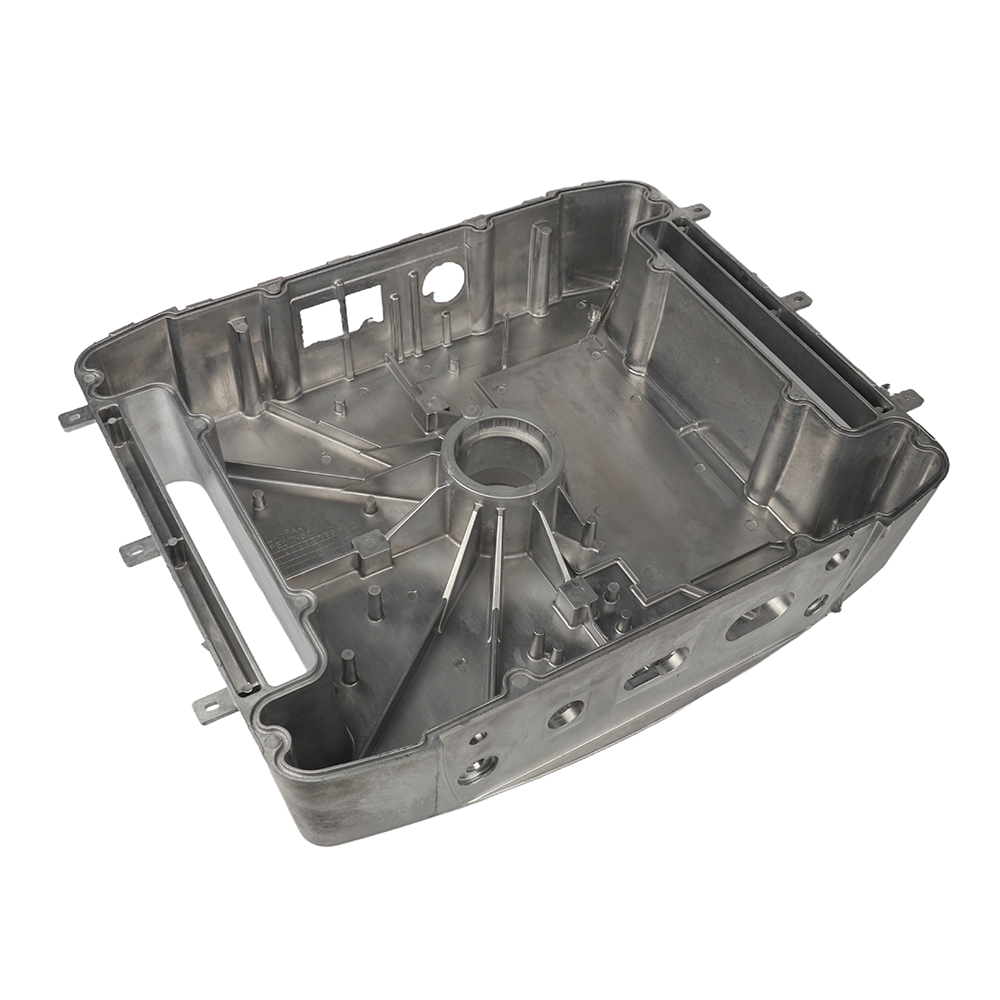
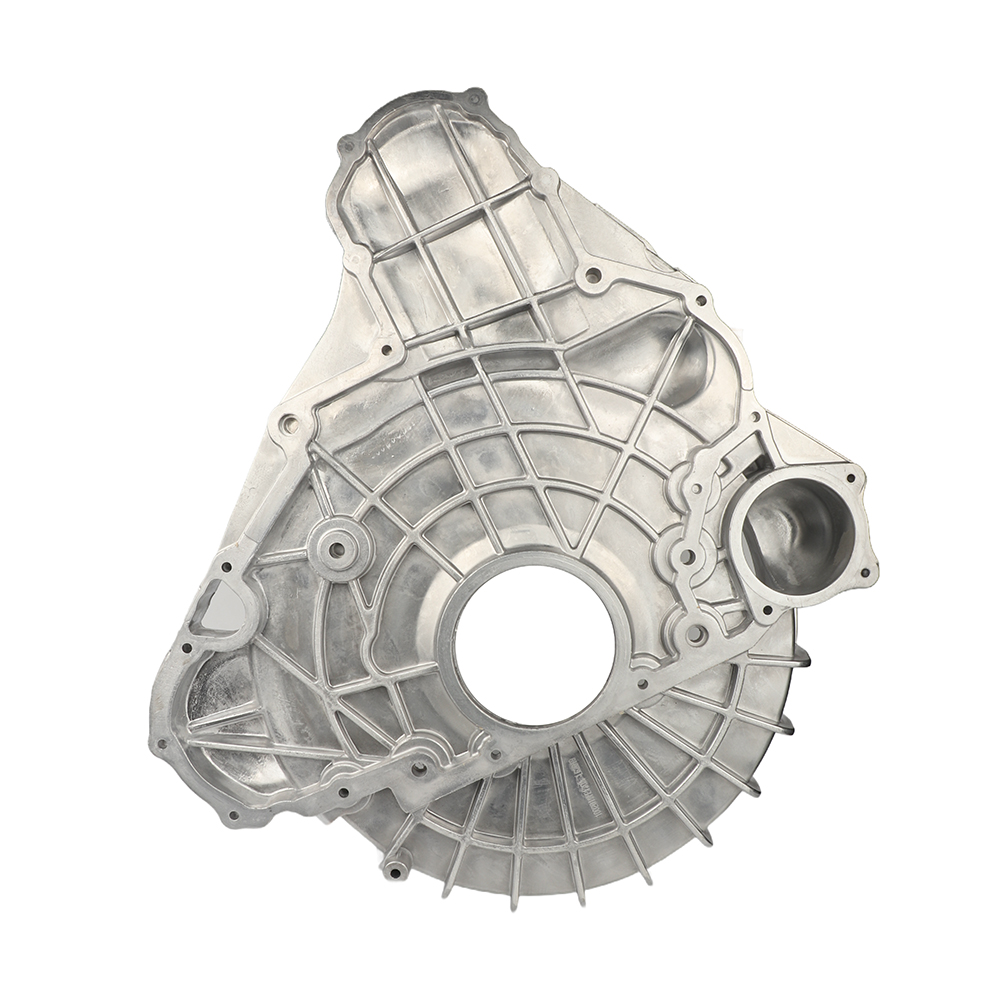
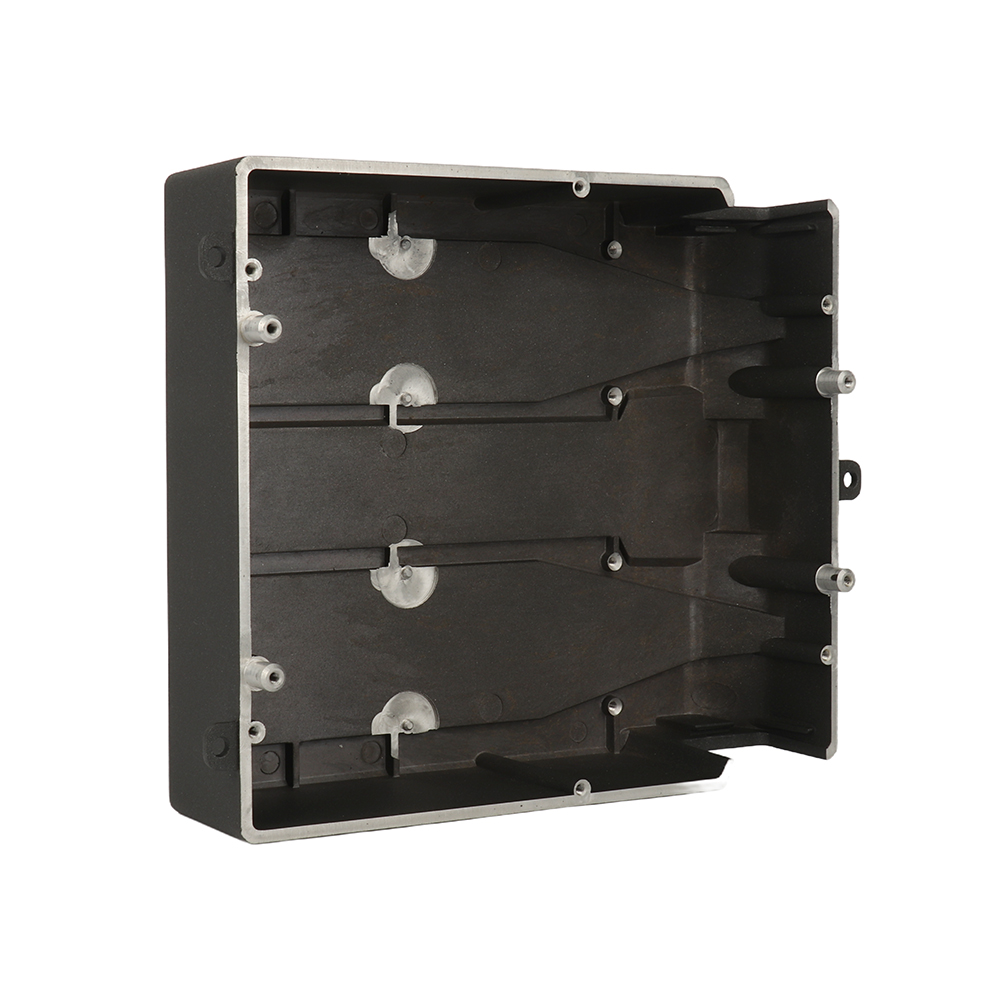
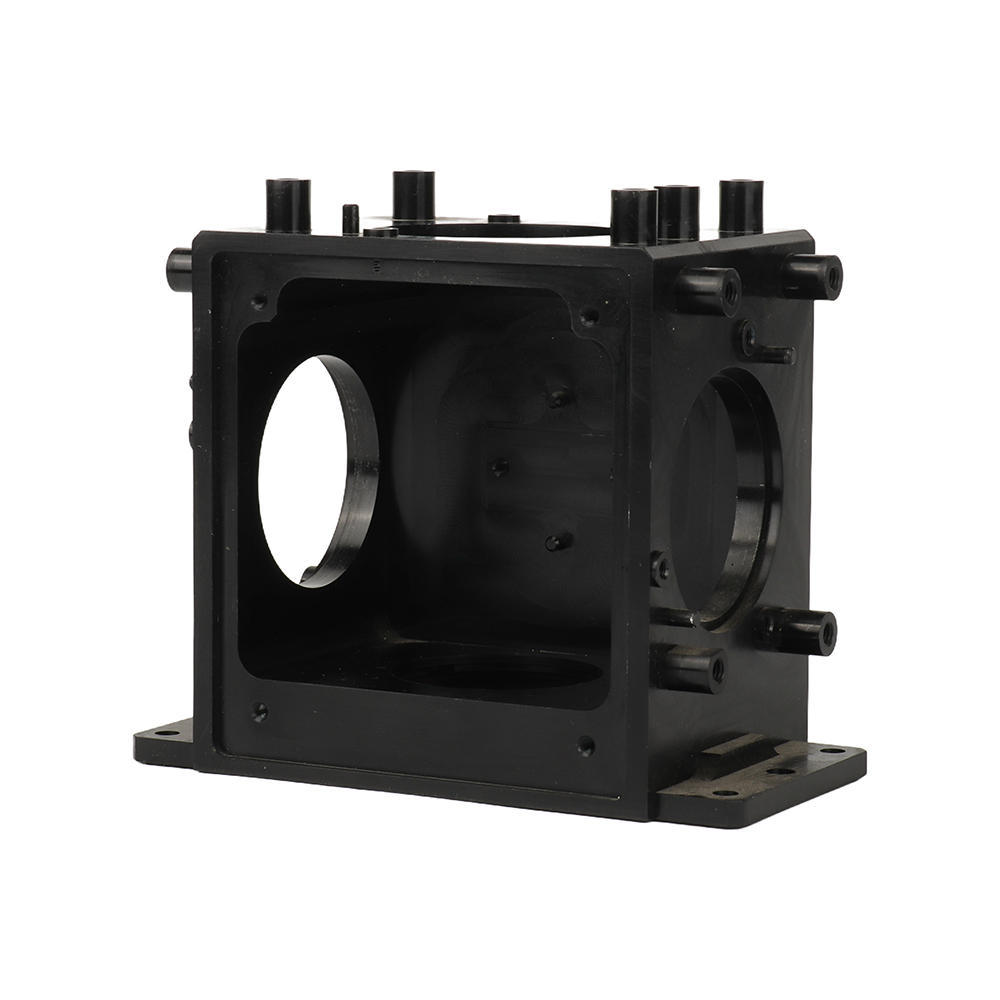
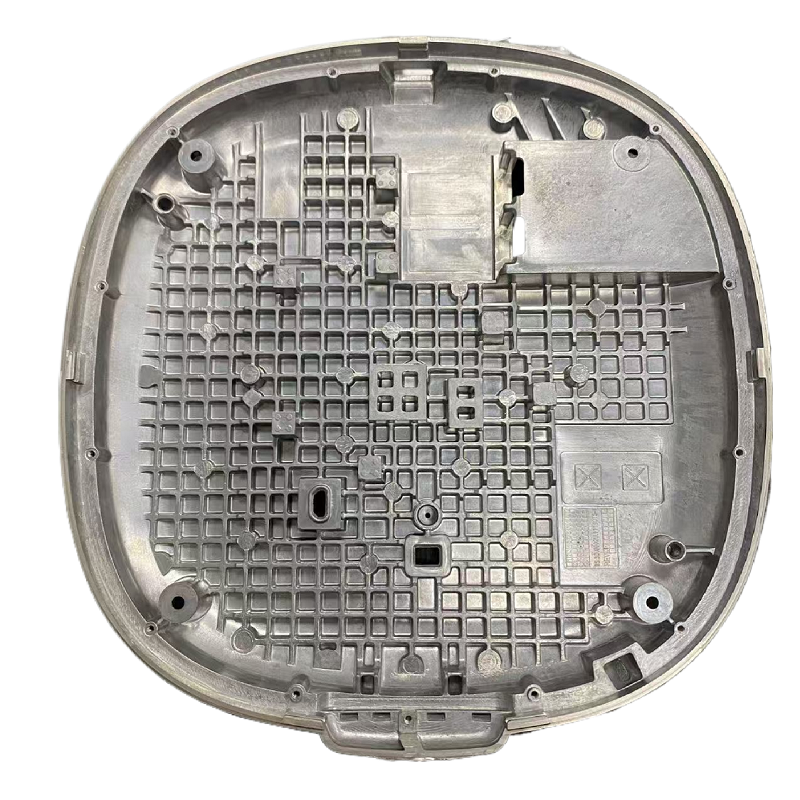
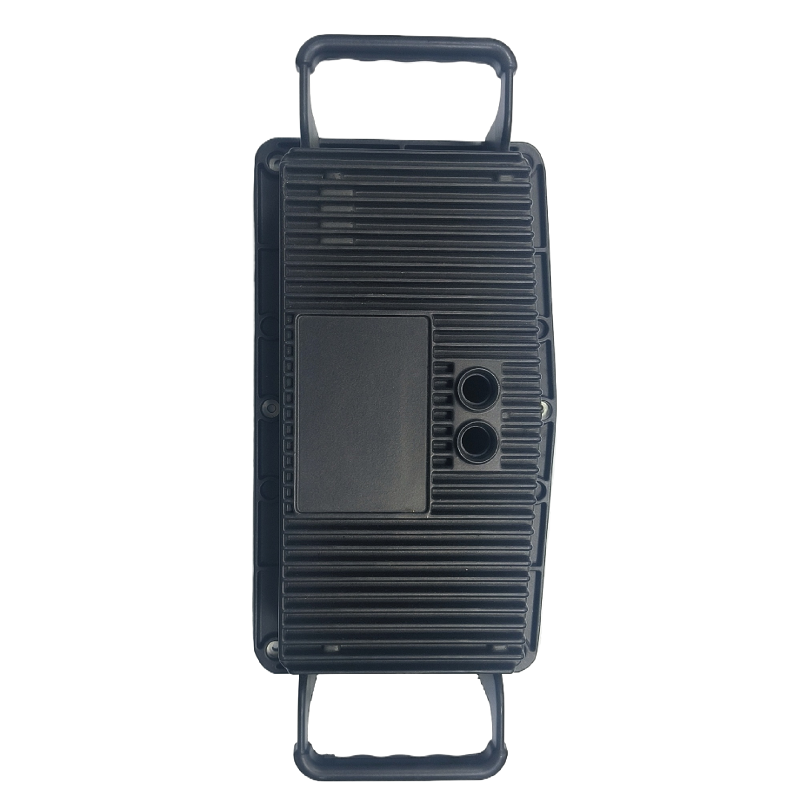
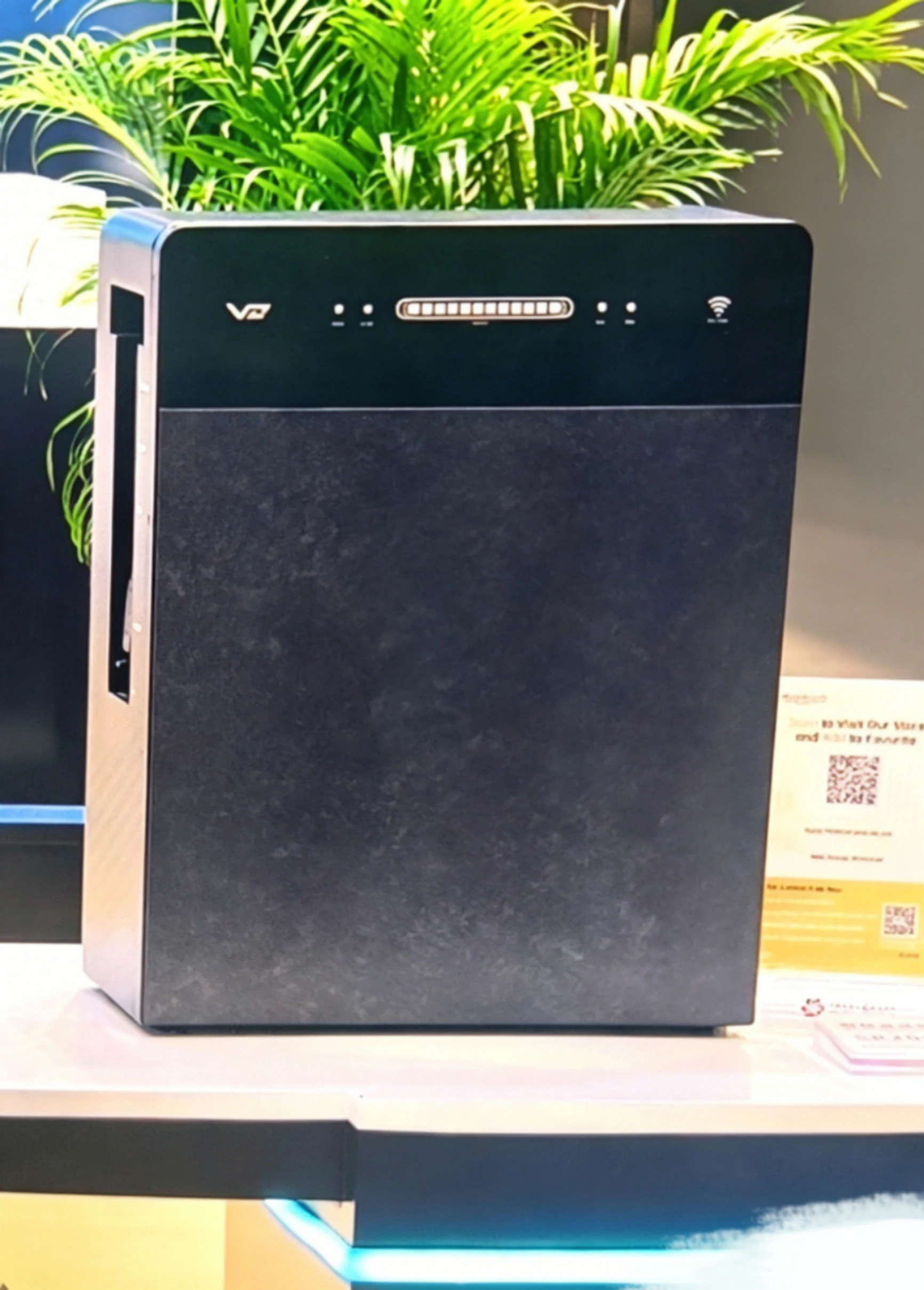
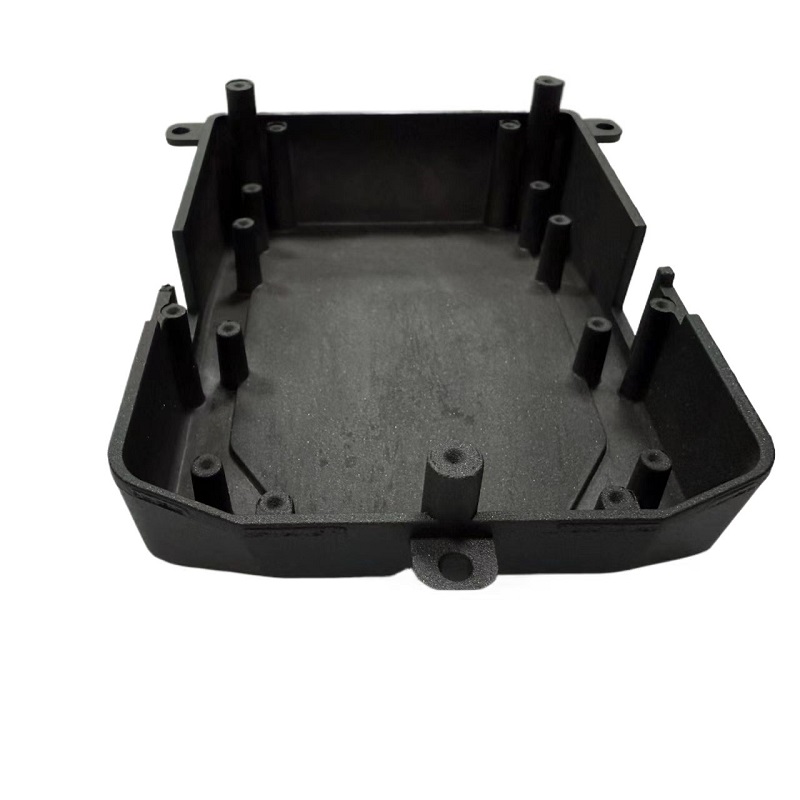
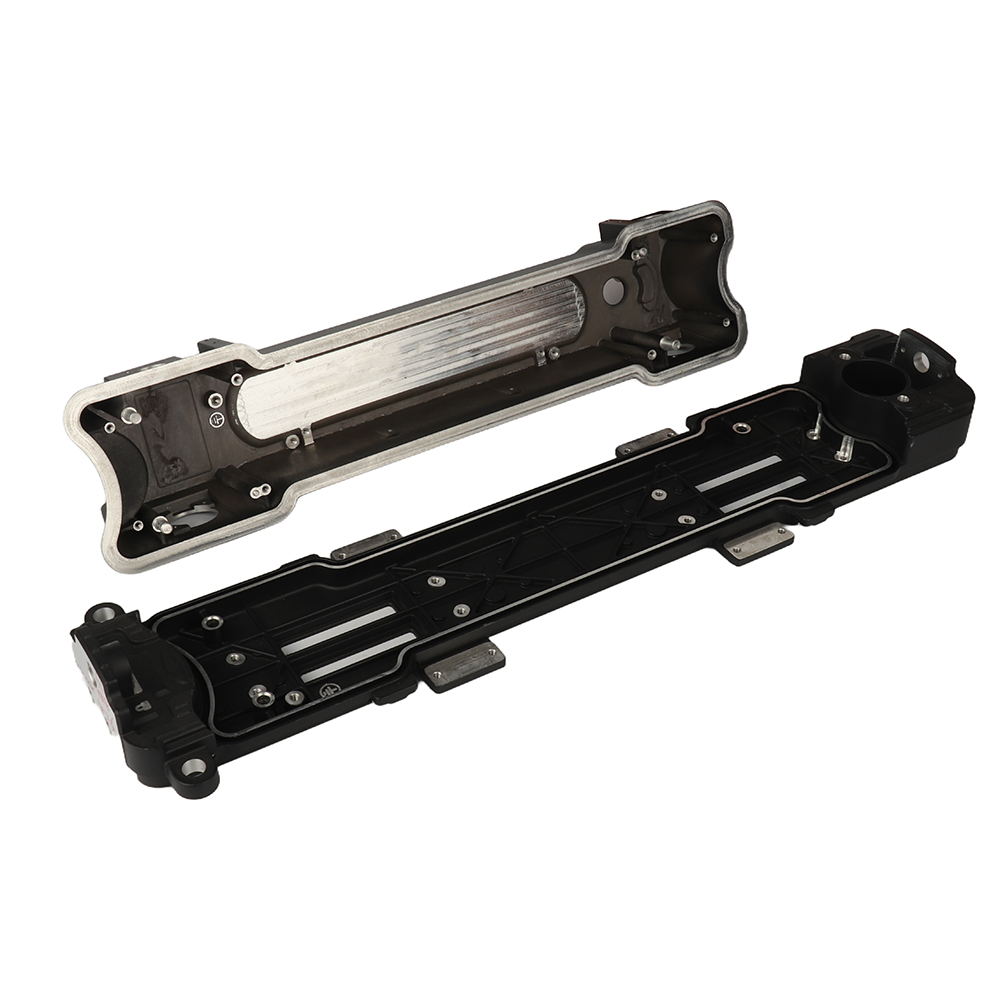
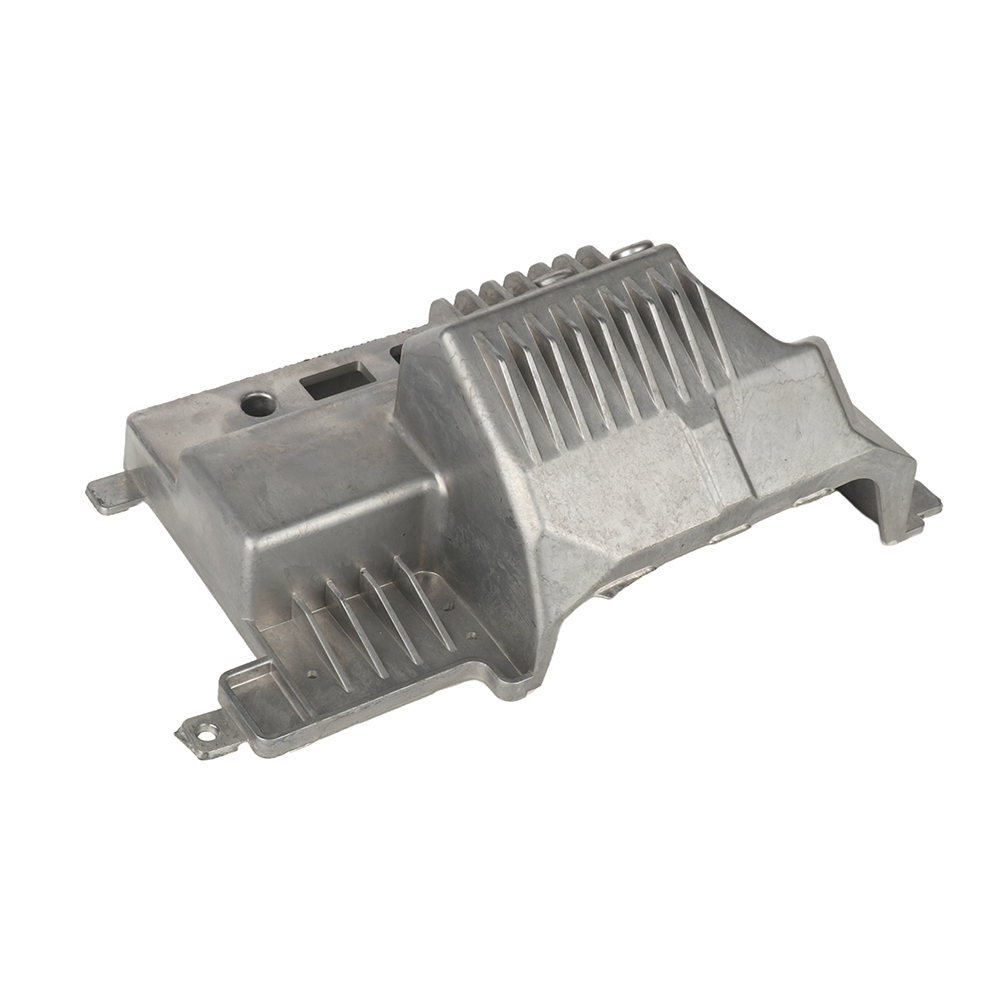
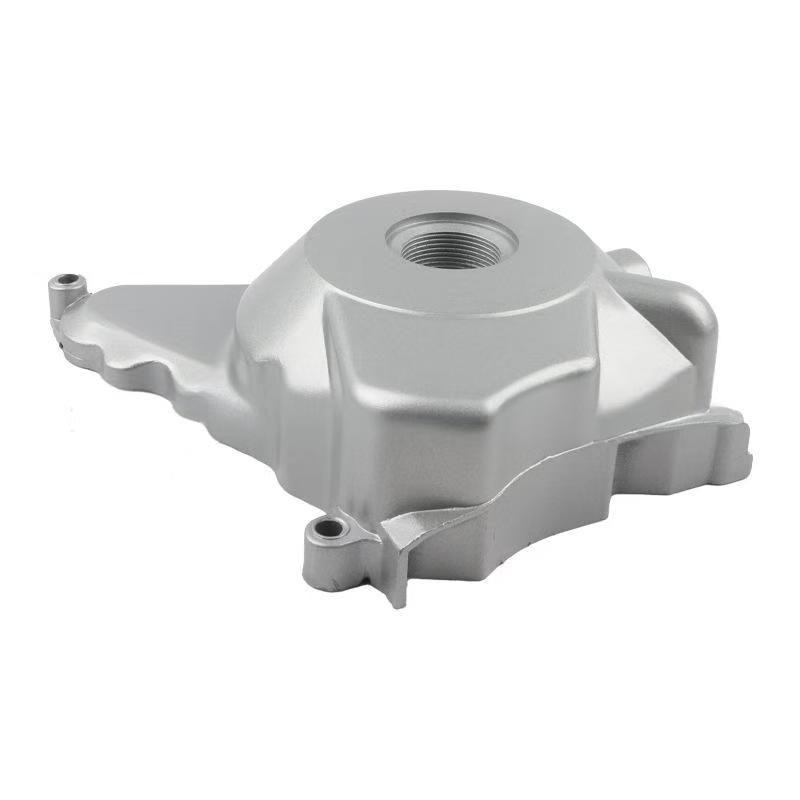
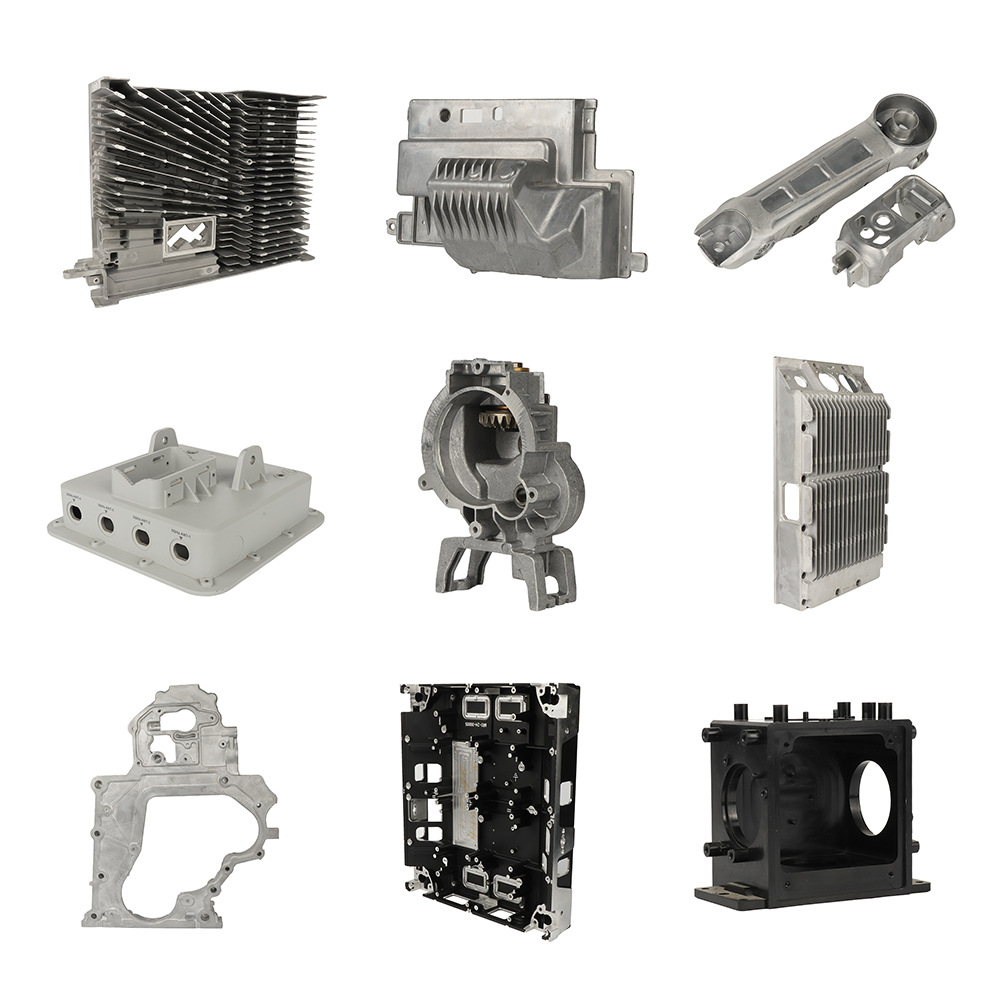
The following is a general image of a die-cast EV battery housing, showing its appearance, structure, and overall design (suitable for most electric vehicle models and energy storage systems):
5. Pros and Cons Comparison of Die-Cast EV Battery Housing
To help you better understand the value of die-cast EV battery housing, we compare it with traditional stamping-welding battery housings and composite material battery housings, detailing their respective pros and cons, so that you can clearly see the advantages of die-cast EV battery housing:
5.1 Die-Cast EV Battery Housing vs. Traditional Stamping-Welding Battery Housing
| Comparison Items | Die-Cast EV Battery Housing | Traditional Stamping-Welding Battery Housing |
|---|---|---|
| Structural Strength | High (one-piece molding, no welding seams, strong impact resistance, can reduce deformation by 16% in collision scenarios) | Low (welding seams are weak points, easy to crack under impact, poor overall rigidity) |
| Sealing Performance | Excellent (one-piece structure, no gaps, waterproof and dustproof, up to IP67 standard) | Poor (welding seams are prone to gaps, easy to enter water and dust) |
| Production Efficiency | High (one-piece molding, short production cycle, one die-casting process takes only 80-90 seconds) | Low (multiple stamping and welding processes, complex procedures, long production cycle) |
| Production Cost | Medium (high initial mold cost, but low mass production cost, saving 30% of factory space) | High (multiple processes, high labor and material costs, more welding points leading to higher failure rate) |
| Weight | Light (aluminum die-casting, 30-40% lighter than steel stamping housings) | Heavy (mostly steel material, high density, affecting vehicle range) |
| Customization | Strong (flexible mold design, suitable for complex structures and customized needs) | Weak (stamping molds are fixed, difficult to adapt to complex structure customization) |
5.2 Die-Cast EV Battery Housing vs. Composite Material Battery Housing
| Comparison Items | Die-Cast EV Battery Housing | Composite Material Battery Housing |
|---|---|---|
| Structural Strength | High (aluminum die-casting, tensile strength 200-450MPa, good impact resistance) | Medium (high tensile strength but poor impact resistance, easy to brittle fracture) |
| Heat Dissipation Performance | Excellent (aluminum has good thermal conductivity, helps battery heat dissipation, ensuring stable battery performance) | Poor (composite materials have poor thermal conductivity, easy to cause battery overheating) |
| Cost | Low (mature production process, low material cost, 20 yuan/kg) | High (expensive composite materials, 100 yuan/kg, immature mass production process) |
| Recyclability | Good (aluminum material is recyclable, conforms to environmental protection trends) | Poor (composite materials are difficult to recycle, causing environmental pollution) |
| Production Cycle | Short (mass production can be achieved quickly, high efficiency) | Long (complex production process, difficult to mass produce) |
5.3 Summary of Pros and Cons of Die-Cast EV Battery Housing
Pros: High structural strength, excellent sealing performance, light weight, high production efficiency, strong customization, low mass production cost, good heat dissipation, recyclable, and perfect compatibility with new energy vehicle lightweight needs. Cons: High initial mold development cost, high requirements for die-casting technology (easy to produce defects such as air holes and cold shut if the process is not controlled properly), and high maintenance cost for large-scale die-casting equipment.
6. Key Benefits of Die-Cast EV Battery Housing
Despite a few minor drawbacks, the die-cast EV battery housing has obvious advantages that far outweigh its disadvantages, bringing multiple core benefits to electric vehicle manufacturers and users, and becoming the mainstream choice in the new energy vehicle industry:
6.1 Ensure Battery Safety, Reduce Safety Hazards
The one-piece die-casting structure of the die-cast EV battery housing has no welding seams, which greatly improves the structural strength and impact resistance. It can effectively resist external collision, extrusion, and puncture, preventing the battery pack from being damaged and causing safety hazards such as fire and explosion. At the same time, its excellent sealing performance can prevent rainwater, dust, and moisture from entering the battery pack, avoiding short circuits and other faults, and ensuring the safe operation of the battery pack in various harsh environments.
6.2 Achieve Vehicle Lightweight, Improve Battery Life
Most die-cast EV battery housings are made of aluminum alloy materials, which have the characteristics of light weight and high strength. Compared with traditional steel stamping-welding housings, they can reduce the weight of the battery system by 30-40%, thereby reducing the overall weight of the vehicle. The lighter the vehicle, the lower the energy consumption, which can effectively improve the battery life of the electric vehicle. For example, NIO ET5’s rear floor adopts integrated die-casting technology, which reduces the weight by 30% and significantly improves the vehicle’s range capacity.
6.3 Improve Production Efficiency, Reduce Production Costs
The die-cast EV battery housing adopts one-piece molding technology, which integrates multiple parts into one, eliminating the complex processes of stamping, welding, and assembly in traditional production. This not only shortens the production cycle (each hour can complete 40-45 castings) but also reduces labor and material costs. Although the initial mold cost is high, the cost advantage becomes more obvious in mass production, which can help electric vehicle manufacturers reduce overall production costs and improve market competitiveness. Some data show that integrated die-casting technology can reduce manufacturing costs by 40% in some regions.
6.4 Strong Customization, Adapt to Diverse Needs
With the continuous upgrading of electric vehicle models, the requirements for battery housings are becoming more and more diverse. The die-cast EV battery housing can be flexibly designed and produced according to the size, shape, and performance requirements of different battery packs, adapting to the design needs of various electric vehicle models. Whether it is a small battery housing for passenger cars or a large battery housing for commercial vehicles, it can be customized to meet the specific needs of customers, which is difficult to achieve with traditional stamping-welding housings.
6.5 Good Heat Dissipation, Extend Battery Service Life
The aluminum alloy material used in the die-cast EV battery housing has excellent thermal conductivity, which can quickly transfer the heat generated during the operation of the battery pack to the outside, avoiding battery overheating and ensuring the stable operation of the battery. This can effectively extend the service life of the battery pack, reduce the cost of battery replacement for users, and improve the overall reliability of the electric vehicle.
6.6 Environmental Protection and Energy Saving, Conform to Industry Trends
Aluminum alloy material is recyclable, and the production process of die-cast EV battery housing is environmentally friendly, which conforms to the global environmental protection and energy-saving trends. The recyclability of aluminum can reduce the waste of resources, and the lightweight design can reduce vehicle energy consumption and carbon emissions, helping the new energy vehicle industry achieve the goal of carbon neutrality.
7. Expert Opinion on Die-Cast EV Battery Housing
To further verify the value and development prospect of die-cast EV battery housing in the new energy vehicle industry, we invited Mr. Robert Johnson, a senior engineer with 18 years of experience in the new energy vehicle and die-casting industry, and the chief technology officer of a well-known global auto parts company, to share his professional views:
“With the rapid development of the new energy vehicle industry, the requirements for battery safety and lightweight are getting higher and higher, and the die-cast EV battery housing has become the core choice of mainstream electric vehicle manufacturers. Compared with traditional battery housings, it has obvious advantages in structural strength, sealing performance, and production efficiency. The one-piece die-casting technology can eliminate nearly 800 welding points, reduce the number of parts by more than 80, and greatly improve the overall reliability of the battery system. In the future, with the continuous upgrading of die-casting technology, the die-cast EV battery housing will develop towards larger size, higher precision, and more intelligence, and will be widely used in more fields such as energy storage. For electric vehicle manufacturers, choosing a high-quality die-cast EV battery housing is the key to improving product competitiveness and ensuring vehicle safety.”
In addition, Ms. Lisa Wang, a procurement director of a leading domestic new energy vehicle manufacturer, also shared her experience: “We have been using die-cast EV battery housings in our main models, and the effect is very good. Compared with traditional stamping-welding housings, they are lighter, more durable, and have better sealing performance. Even in harsh environments such as high temperature and heavy rain, they can ensure the stable operation of the battery pack. At the same time, the high production efficiency of die-cast housings also helps us shorten the production cycle and reduce production costs. Choosing a reliable supplier like Xinghang Precision Hardware to cooperate with is crucial to ensuring the quality of die-cast EV battery housings.”
8. Frequently Asked Questions (FAQs) About Die-Cast EV Battery Housing
We have sorted out the most common questions about die-cast EV battery housing in the industry, and given professional answers to help you better understand the product and make wise decisions for your new energy vehicle projects:
8.1 Q: What materials are commonly used for die-cast EV battery housing? What are their advantages?
A: The most commonly used material for die-cast EV battery housing is aluminum alloy (such as ADC12, A380, AlSi10Mg). Its advantages are light weight, high strength, good thermal conductivity, corrosion resistance, and recyclability. Aluminum alloy die-cast housing can not only achieve vehicle lightweight but also ensure structural strength and heat dissipation performance, which is perfectly compatible with the needs of electric vehicle batteries. In addition, a small number of die-cast EV battery housings use magnesium alloy materials, which are lighter but have higher cost and are mainly used in high-end electric vehicle models.
8.2 Q: Can the die-cast EV battery housing be customized according to different battery pack sizes and models?
A: Yes. Xinghang Precision Hardware specializes in providing customized battery housing castings. We can design and produce die-cast EV battery housings that perfectly match your battery pack size, shape, and performance requirements according to your specific needs (such as vehicle model, battery capacity, and installation position). Our professional R&D team will provide one-stop customization services from mold design to product delivery, ensuring that the product meets your actual application needs.
8.3 Q: What is the service life of the die-cast EV battery housing? How to maintain it?
A: The service life of the die-cast EV battery housing is usually 8-12 years, which is basically the same as the service life of the electric vehicle. The maintenance is relatively simple: first, regularly check the surface of the housing for scratches, deformation, or corrosion, and repair or replace it in time if there is any damage; second, check the sealing performance regularly to ensure that there is no water or dust entering the battery pack; third, avoid severe collision or extrusion of the battery housing during use. Under normal use and maintenance, the die-cast EV battery housing can maintain stable performance for a long time.
8.4 Q: Is the die-cast EV battery housing waterproof and dustproof? Can it adapt to harsh outdoor environments?
A: Yes. The die-cast EV battery housing adopts a one-piece structure and is equipped with high-quality sealing gaskets, which can achieve IP67 or higher waterproof and dustproof standards. It can withstand heavy rain, heavy fog, dust, and other harsh outdoor environments, effectively preventing water and dust from entering the battery pack and ensuring the safe operation of the battery. Even in coastal areas with high salt spray, the aluminum alloy die-cast housing treated with anti-corrosion technology can resist corrosion and maintain stable performance.
8.5 Q: Compared with traditional battery housings, what is the cost performance of die-cast EV battery housing?
A: From the long-term perspective, the die-cast EV battery housing has higher cost performance. Although its initial mold development cost is higher than that of traditional stamping-welding housings, it has the advantages of high production efficiency, low mass production cost, long service life, and low maintenance cost. It can help electric vehicle manufacturers reduce overall production costs and avoid economic losses caused by battery damage due to poor housing performance. For large-scale production projects, the cost advantage of die-cast EV battery housing is more obvious, and it is a more cost-effective choice.
8.6 Q: What certifications do die-cast EV battery housings need to meet?
A: The die-cast EV battery housing needs to meet relevant international and domestic certifications to ensure product quality and safety. Common certifications include ISO9001 quality management system certification, IATF16949 automotive industry quality management system certification, RoHS environmental protection certification, and IP waterproof and dustproof certification. Xinghang Precision Hardware’s die-cast EV battery housings have passed all the above certifications, ensuring that the products meet the quality standards of the global new energy vehicle industry.
9. Conclusion: Trends in Aluminum Die Casting Industry & How to Choose a High-Quality Hardware Supplier
9.1 Trends in Aluminum Die Casting Industry
With the rapid development of the new energy vehicle industry and the continuous promotion of global environmental protection and energy-saving policies, the aluminum die casting industry is showing three obvious development trends: First, integration and large-scale—integrated die-casting technology is becoming more and more mature, and large-scale die-cast parts (such as 2.4m×0.8m super-large integrated battery pack lower housing) are gradually popularized, which can integrate multiple parts into one, improving production efficiency and product performance. Second, high precision and customization—the market’s demand for high-precision, customized die-cast products (including die-cast EV battery housing) is growing, and the die-casting process is constantly upgraded to meet the diverse needs of different scenarios. Third, environmental protection and intelligence—recyclable aluminum alloy materials and environmentally friendly production processes will become the mainstream, and die-cast products will be integrated with intelligent technology (such as intelligent monitoring of battery housing status) to meet the needs of modern new energy vehicle development. At the same time, the aluminum die casting industry will continue to benefit from the growth of new energy vehicle sales, and the market scale will maintain a high growth rate.
9.2 How to Choose a High-Quality Hardware Processing Supplier
Choosing a high-quality hardware processing supplier is the key to ensuring the quality of die-cast EV battery housing and the smooth operation of new energy vehicle projects. When selecting a supplier, you should focus on the following three core points: First, qualification and certification—the supplier should have relevant international certifications (such as ISO9001, IATF16949, RoHS) to ensure that the product quality meets the standard and is suitable for the new energy vehicle industry. Second, production capacity and technology—the supplier should have advanced die-casting equipment (such as large-tonnage die-casting machines), a professional R&D team, and rich experience in die-cast EV battery housing production, which can provide high-precision and customized products. Third, after-sales service—the supplier should have a complete after-sales service system, which can timely solve the problems encountered in product use, installation, and maintenance, providing long-term technical support.
9.3 Recommendation: Xinghang Precision Hardware
If you are looking for a reliable die-cast EV battery housing supplier, we strongly recommend Xinghang Precision Hardware. As a professional hardware processing enterprise, we specialize in providing top-notch die casting to our customers. Our team of experts is dedicated to delivering high quality battery housing Die-Casting Parts. We have advanced die-casting production lines, professional R&D and technical teams, and strict quality control systems, focusing on the R&D, production, and customization of die-cast EV battery housing. We provide EV/EA Battery Housing Casting and customized battery housing castings, which are widely used in passenger electric vehicles, commercial electric vehicles, special electric vehicles, and energy storage systems. Our products have passed multiple international certifications, with the advantages of high strength, light weight, good sealing, and long service life, and have won the trust of many new energy vehicle manufacturers at home and abroad. We provide one-stop customization services, from product design to production and delivery, to meet your diverse needs. At the same time, we have a complete after-sales service system to provide you with professional technical support and after-sales guarantee, solving your worries.
Contact us today for a free quote:
- Mobile/WeChat: +86 18819502691
- Email: liqine@xinghangcn.com
Xinghang Precision Hardware is committed to providing you with high-quality die-cast EV battery housing solutions, helping your new energy vehicle projects achieve better results and create greater value!
Custom aluminum heatsink | How to Customize Die-Cast Aluminum Heat Sink? A Complete Guide
Cabinet lock | What is a die-cast aluminum LED display cabinet lock? The Ultimate Guide
Related Article


